Mobile applications have grown in popularity over the past decade. Today’s consumers demand apps to be quick, intuitive, and “smart”—not just functional. At the same time, organisations are seeking methods to increase engagement, cut expenses, and make better decisions based on the data they currently have. This is where AI and ML come in.
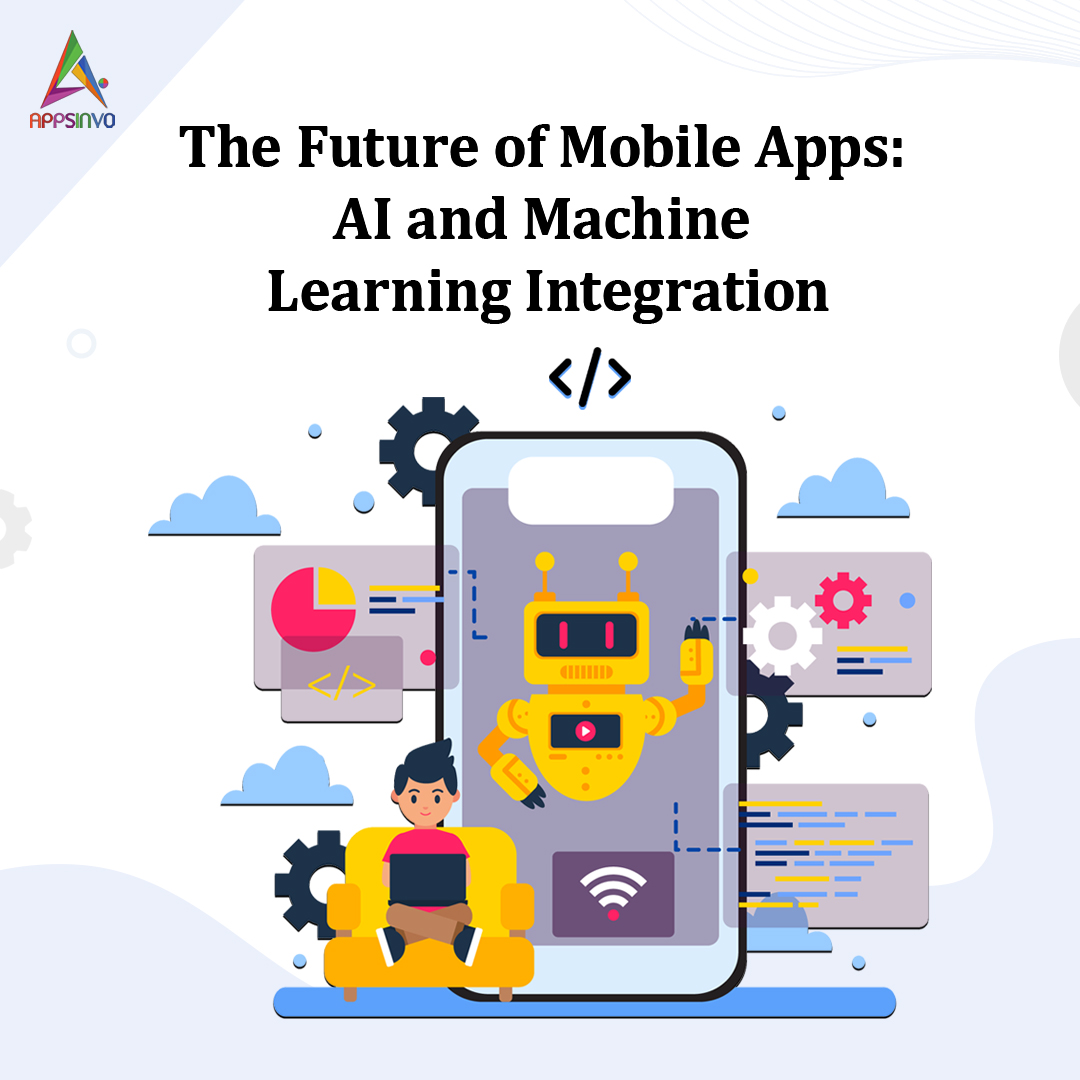
Artificial intelligence and machine learning are quickly becoming the foundation of next-generation mobile experiences. They let programs analyze user behavior, forecast what people want next, automate repetitive operations, and detect anomalous activity in real-time. Understanding AI + ML in mobile apps is no longer optional—it’s a competitive edge for business owners, startup founders, and tech enthusiasts alike.
Simple Definitions of AI vs. ML
- AI (artificial intelligence): The broader concept of machines accomplishing tasks that generally need human intelligence, such as speech recognition, language comprehension, or decision-making.
- Machine Learning (ML): A subset of artificial intelligence in which models learn patterns from data and improve over time rather than being explicitly programmed for each outcome.Consider AI as the “goal” (smart behaviour) and ML as one of the “methods” to achieve it (data-driven learning).
Traditional mobile apps obey predefined criteria, such as “If X happens, show Y.” AI-powered apps go beyond that. They can learn from user interactions, analyse context, and adjust responses dynamically.
Here’s why it matters:
- More relevant experiences: Users want content that is relevant to them rather than generic.
- Better business outcomes: Prediction and automation can help reduce churn, enhance conversions, and boost retention.
- Continuous improvement: As more data is fed into ML models, the accuracy of the outcomes improves with time.As AI capabilities become more accessible through modern tooling and cloud services, more businesses are implementing AI-driven features to remain competitive.
How AI Improves the User Experience: Personalisation and Predictive Analytics
One of the most obvious AI advantages for users is personalisation. Instead of treating all users the same, AI customises information and recommendations based on their behaviour, interests, location, device, and even time of day.
E-commerce apps recommend products that match a user’s browsing tendencies.
News applications customise headlines to reflect readers’ interests.
Predictive analytics also alters the game.
AI can anticipate what a user will do next, such as:
- What product will someone buy?
- When a customer is likely to leave
- What support request will they submit?
- Risk of payment fraud
This means your app can take action before the user asks.
Machine Learning’s Impact on Automation, Data Analysis, and Decision Making
Machine learning drives the “thinking” behind automation.
Automation
Machine learning models can perform repetitive jobs such as:
Scalability
Classifying communications, papers, or transactions
- Route support tickets to the appropriate team.
- Detecting spam and questionable logins
- This reduces manual effort and accelerates workflows.
Benefits of Integrating AI and Machine Learning into Mobile Apps
When AI and machine learning are properly deployed, the outcomes are frequently measurable and long-lasting:
Efficiency
Automation lowers manual labour and accelerates procedures.
Scalability
AI models can handle increased traffic and data quantities without incurring linear costs.
Increased user engagement
Personalisation and intelligent recommendations keep consumers coming back.
Cost reduction
Operational costs can be reduced by detecting fraud, automating support, and making better decisions.
Differentiating yourself from the competition
AI characteristics frequently become “signature” capabilities that competitors struggle to replicate rapidly.
Challenges to Consider (Because AI Is Not Magic)
- While the opportunities are vast, AI integration poses significant challenges:1. Data Privacy and ComplianceAI relies on user data. Businesses must manage it appropriately, using:
- Transparent Data Practices
- Secure storage and transfer.
- Regulations such as GDPR or UK GDPR, depending on operations
If you gather personal data, you must have a consent and protection policy in place.
2. High development cost
Building AI-driven systems can be expensive due to:
- Specialized talent
- Data preparation and labeling
- Model training and testing
However, costs can be reduced by using pre-trained models, APIs, and phased rollouts.
3. Technical complexity
AI/ML requires careful engineering:
- Model integration into the mobile app
- Performance tuning
- Monitoring and continuous improvement
4. Model drift and accuracy maintenance
User behavior changes. ML models must be monitored and updated to stay accurate.
Future trends: AI-Powered Automation, Edge Computing, and Smarter Ecosystems
AI-powered automation is omnipresent.Apps will progressively automate operations such as scheduling, debugging, and content management depending on context and user intent.
Edge computing
Instead of storing anything in the cloud, apps can run AI models on-device. This can
- Reduce delay
- Improve offline capability
- Improve privacy by storing sensitive data locally
Expect AI to connect across apps and services:
- A unified assistant that recognises your preferences across all tools
- Health, finance, retail, and productivity apps work together through safe data exchanges.
- APIs and clever routing allow for more interoperable systems.
Conclusion: A Strong Case for AI-Powered Mobile Apps
Artificial intelligence and machine learning are transforming mobile applications from “static tools” to adaptive, predictive, and personalised experiences. For organisations and startups, the benefits are obvious: increased user engagement, smarter automation, higher security, and better decision-making. Yes, there are problems such as privacy and complexity—but with the correct strategy, planning, and development approach, AI may be a long-term growth engine rather than a dangerous experiment.
If you’re thinking about implementing AI capabilities, such as personalisation, chatbots, fraud detection, or predictive analytics, now is the time to develop your strategy.
Call to Action: Collaborate with an experienced development team to create an AI-ready mobile strategy that strikes a balance between innovation, privacy, performance, and maintenance. Companies such as Appsinvo can assist businesses in developing and scaling AI-powered mobile solutions that are suited to their specific needs.
1. What is Artificial Intelligence (AI) in mobile app development?AI in mobile app development refers to characteristics that make apps “smart,” such as language comprehension, pattern recognition, content personalisation, and prediction—often powered by machine learning models.
2. How does machine learning improve mobile applications?
Machine learning improves mobile apps by learning from user data and behaviour to create better suggestions, automate chores, discover anomalies, and make more accurate predictions over time.
3. What are some instances of AI-enabled mobile apps?
Examples include chatbots for customer service, recommendation systems in shopping and streaming apps, voice assistants, and fraud detection tools in banking and finance apps.
4. Is it expensive to integrate AI into mobile applications?
Data preparation, model development, and engineering complexity can all add up to high costs when implementing AI. Costs can be lowered by leveraging pre-trained models, AI APIs, and a phased implementation strategy.
5. Which industries benefit the most from AI-powered applications?
Industries such as e-commerce, banking, healthcare, logistics, customer service, and education benefit greatly since they create big datasets and demand personalised or predictive capabilities.
6. What is the future of artificial intelligence in mobile applications?
The future will see increased on-device intelligence (edge computing), smarter automation, conversational interfaces, and more interconnected ecosystems that provide personalised experiences with lower latency and greater privacy.