
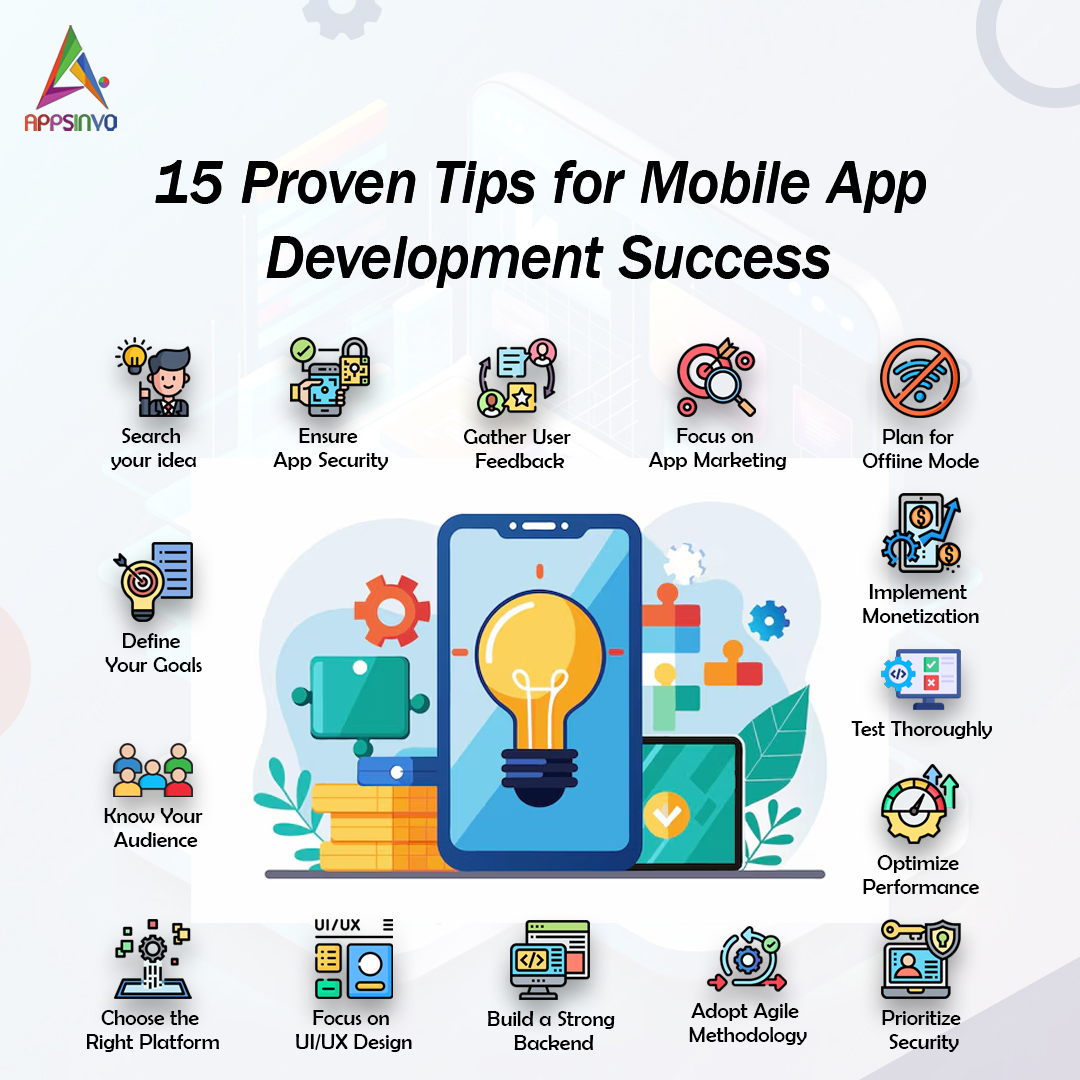
1) Begin with a clear problem, not just features.
2) Research your competition and users
3) Define the “minimum lovable product
4) Select the appropriate platform strategy early
5) Design user journeys and clear flows
6) Design for speed and clarity
7) Build a strong architecture from day one
Even for simple apps, use a maintainable structure. Keep business logic distinct from UI, apply consistent code conventions, and design a scalable project layout. This saves time later, when the functionalities expand.
8) Use analytics to measure what’s important.
You cannot improve what you do not track. Add analytics to track onboarding completion, retention, session time, feature usage, and conversions. Define success measures prior to launch.
9) Test continuously, not just before release
Testing should be placed throughout development. Use unit tests for logic, UI tests for flows, and device testing to simulate real-world behaviour. Automate wherever feasible to detect concerns early.
10) Concentrate on performance and battery usage.
Mobile performance is not optional. Optimise loading times, reduce heavy animations, compress images, and avoid unneeded background work. Poor performance is one of the quickest ways to lose users.
11) Prioritize security and privacy
12) Reduce friction in onboarding
Your onboarding should explain value quickly and guide users without overwhelming them. Use short forms, enable social login when appropriate, and offer quick previews of what the user will get.
13. Plan for scalability and updates.
Expect growth. Build your backend and app infrastructure to support more users, data, and features. Also, determine how you will safely and swiftly distribute changes.
14) Improve feedback loops after launch.
Launch doesn’t appear to the end. Track crash reports, user feedback, and metrics. Identify trends in what people enjoy and what bothers them, then prioritise fixes and additions in sprints.
15) Publish, market, and support as a single system.
Your app’s success is dependent on more than just development. Prepare shop assets (screenshots, descriptions, preview videos), select relevant keywords, and respond to consumer feedback. Support users immediately and improve the app in response to real-world needs.
Conclusion: Mobile success is built—not hoped for.
Successful mobile app development requires disciplined execution: understand the user, design for clarity, build stable software, monitor performance, and iterate based on real-world feedback. If you follow these 15 tried-and-true strategies, beginning with the early planning stages and continuing after launch, you’ll enhance your chances of creating an app that stands out, maintains users, and expands over time.