Introduction (How Much Does It Cost to Design a Mobile App?)
In today’s digital age, your mobile app is often the first point of interaction between clients and your business. That’s why mobile app design is as important as development.
Good design influences how people interact with your app—how fast they comprehend it, how effortlessly they execute activities, and how confident they are in your product. When UX and UI are expertly executed, users stay longer, convert more, and recommend the app to others. For business owners, startups, and entrepreneurs, design is more than just “beauty”; it has a direct impact on engagement, retention, and profitability. In this post, we’ll explain what drives mobile app design costs and how to create a wise budget.
Factors Impacting Mobile App Design Cost
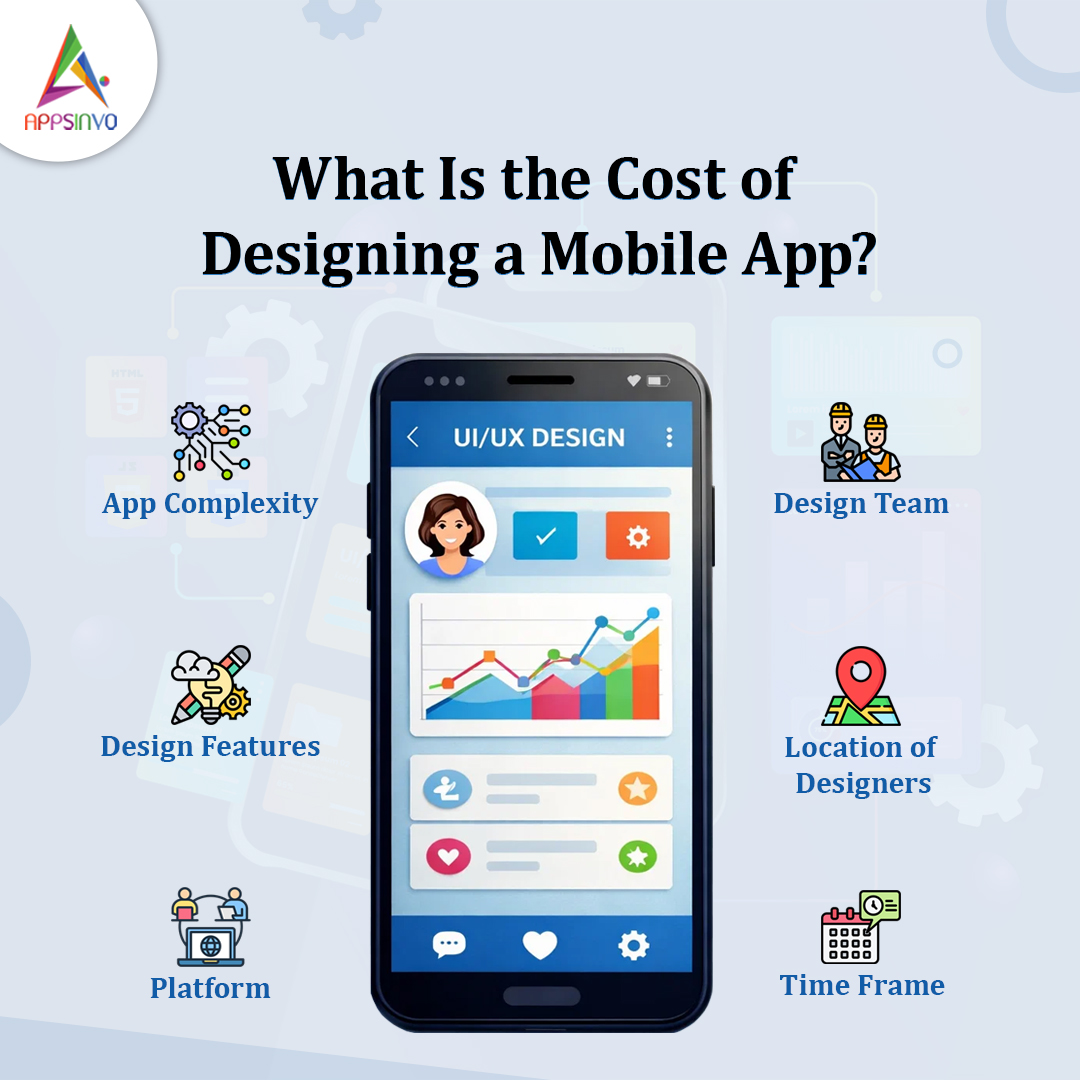
1. Application Complexity (Simple, Medium, Complex)
Complexity is frequently the most significant cost factor.
Simple apps (e.g., company brochure app, appointment form) include fewer displays, simpler navigation, and shorter user journeys.
Medium apps (e.g., booking, basic marketplace, membership) have more features, user flows, and UI components.
Complex apps (e.g., on-demand delivery with real-time tracking, multi-role business apps) have complex interfaces, multiple roles, dashboards, workflows, and extensive edge-case design.
For example, designing an e-commerce app with product listings, cart, checkout, and account pages will be more expensive than creating a simple landing app.
Your design requirements dictate the level of effort. A typical project involves:UX design includes user flows, wireframes, navigation, and usability planning.
UI design includes visual appearance (colours, typography, icons), screen layouts, and UI components.
Prototyping: interactive displays are used to test the experience before development.
If your company requires usability testing, accessibility considerations, or numerous rounds of stakeholder feedback, app development pricing for design may rise.
3. Number of screens/pages
- Fewer screens mean lower costs (e.g., 10-15 important screens).
- Having a large number of screens and states leads to a higher cost.
For example, an on-demand app may require unique designs for rider/customer, tracking state, notification, payment, and support displays.
4. Custom versus Standard Design
Typically, you’ll have the option of:
Standard or template-based designs are faster and cheaper, making them ideal for MVPs.
Custom Design: suited to your brand and users, more time and creative effort.
A unique design also facilitates long-term scalability—particularly as your software grows.
5. Platform: iOS, Android, or Both
The design cost varies based on the platform scope.
iOS only: There are fewer variations to consider.
Android Only: Similar effort, platform patterns vary slightly.
- Experienced UI/UX designers and product teams may charge more, but they typically deliver more quickly and with fewer modifications.
- distinct locations have distinct pricing norms, thus your budget may alter depending on where the design team is located.
Estimated Cost Breakdown (USD or INR)
Below are realistic mobile app design cost ranges for businesses. Prices vary by scope, but these estimates help you plan.
- USD: $3,000-$8,000;
- INR: ₹2.5 lakh-₹7 lakh.
Ideal for: informative apps, short booking forms, and minimal onboarding.
Mid-Range Design (Feature-Rich Application)
- USD: $8,000-$20,000;
- INR: ₹7 lakh-₹17 lakh.
Apps with a variety of features, user accounts, dashboards, and meaningful user flows work best.
Enterprise-Grade Design (complex workflows)
- USD: $20,000–$60,000+
- INR: ₹17 lakh–₹52 lakh+
Best suited for: multi-role apps, administrative systems, complicated workflows, dashboards, and extensive customisation.
Cost by App Type (Quick Breakdown)
- Mostly wireframes + core UI screens.
- Limited user flows
2. eCommerce App
- Product listing, product detail, cart, checkout, orders, account UI
- More states (loading, error, empty cart)
3. On-demand App
- Customer + service-provider flows.
- Tracking, job states, messaging, payments, notifications
4. Enterprise App
- Multiple roles, dashboards, workflow screens
- Often needs a scalable design system
UI vs UX Design Cost Explanation
Understanding UI/UX cost is essential before you request quotes.
What is UI Design?
UI (User Interface) is the visual layer:
- colors, typography, buttons, layout
- icons and brand styling
- consistent components
UI cost contribution: Often includes designing screen visuals, styling elements, and creating reusable UI components.
What is UX Design?
UX (User Experience) focuses on usability and flow:
- user journeys and wireframes
- navigation structure
- how users complete tasks with minimal friction
UX cost contribution: Includes UX research (sometimes), wireframes, interaction design, and iterative testing.
How Much Do They Cost Together?
Most projects allocate budget to both:
- UX ensures the app works logically
- UI ensures it looks good and feels consistent
A strong mobile app design process combines both—usually increasing satisfaction and reducing costly redesign later.
Cost-Effective App Design Strategies
- Begin with an MVP: Design only what you need for launch, then add more functionality afterward.
- Use a design system whenever possible: Reusable components need less redesign and speed up future screens.
- Keep the requirements explicit: To minimise expensive modifications, provide goals, target users, and critical flows as early as possible.
- Choose the appropriate prototype level: Low-to-medium fidelity helps validate flows, whereas high fidelity is best for final UI selections.
- Consider the templates for early testing: A template-based foundation might assist you in validating the product before proceeding with a full bespoke design.
Why Investing in Good Design Matters
Good design isn’t a “nice to have”—it’s a growth strategy.
1. ROI and Reduced Development Rework
When UX is solid, developers build faster and fix fewer issues. This improves overall app development pricing efficiency.
2. Higher User Retention
Users stay when:
- onboarding is simple
- navigation feels intuitive
- screens are fast and consistent
Poor design increases drop-offs, especially during checkout, login, or onboarding.
3. Strong Brand Image
Your app’s design becomes part of your brand perception. A polished UI/UX builds trust—particularly for fintech, healthcare, B2B, and eCommerce.
Conclusion
FAQs
1. What is the cost of designing a simple mobile app?
The cost of designing a simple mobile app can range from $3,000 to $8,000 (about ₹2.5 lakh to ₹7 lakh), depending on scope and screen count.
2. How long does app design take?
The typical app design timetable is 3 to 8 weeks for MVPs and 8 to 16+ weeks for complicated or business apps.
3. Can I cut app design costs?
Yes. To cut expenses, start with an MVP, restrict the number of screens in the initial phase, use reusable UI components, and provide precise requirements
4. What is included in the app design cost?
5. Is UI/UX design a worthwhile investment?
Absolutely. Strong UI/UX enhances onboarding, usability, retention, and conversion rates, frequently decreasing development rework and boosting ROI over time.