Fintech apps handle some of the most sensitive data a user can share: bank details, identity documents, transaction history and more. One security lapse can mean financial loss, regulatory penalties and a permanent dent in customer trust.
So whether you are building a digital wallet, a lending platform, a payment gateway or an investment app, security and compliance cannot be an afterthought. They have to be part of your product from day one.
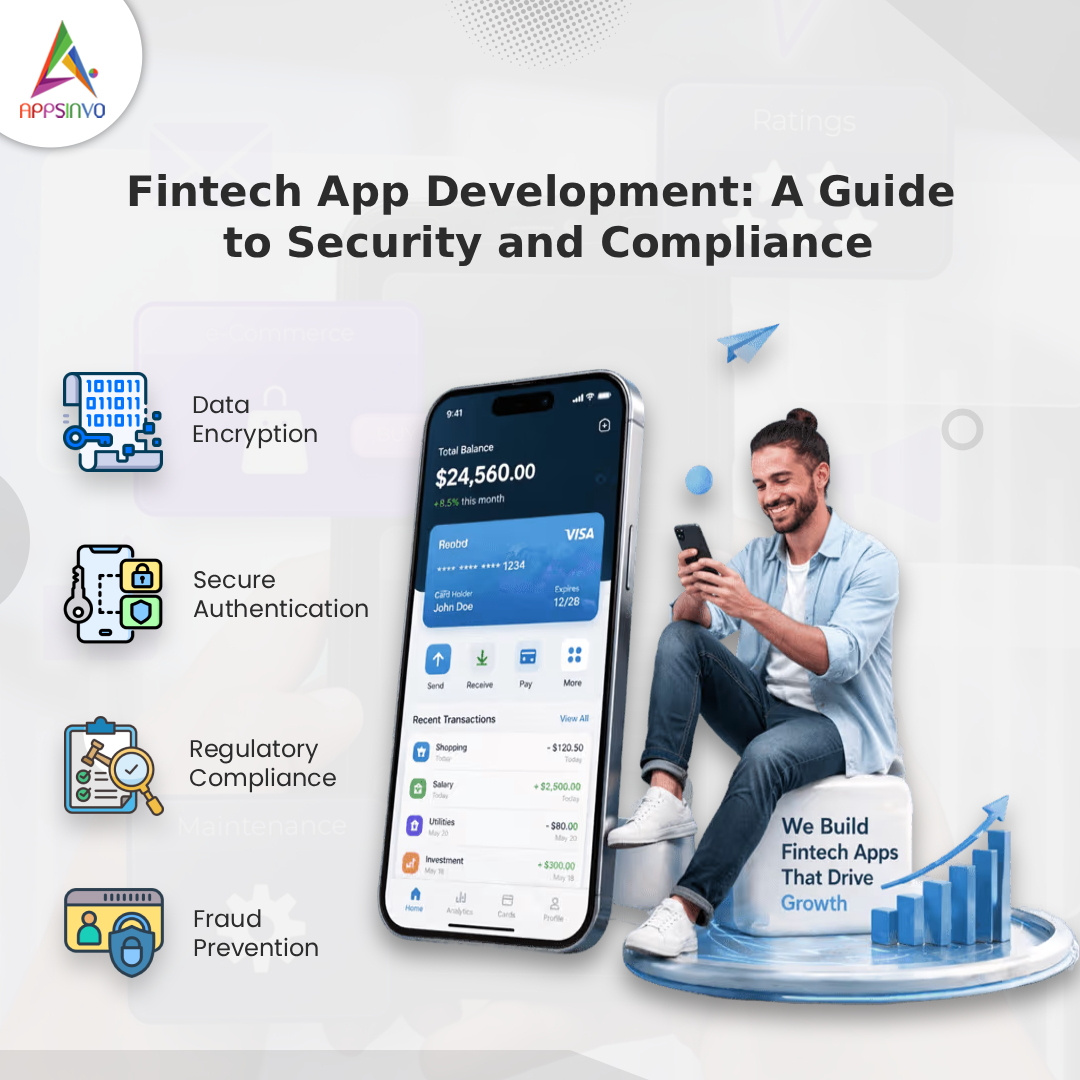
This guide covers the key security practices, regulations and development strategies you need to build a fintech app that is safe, trusted and market-ready.
Why Security and Compliance Matter in Fintech
Unlike most other app categories, fintech sits at the intersection of money, personal data and regulation. That makes it a prime target for cybercriminals and a priority for regulators.
- User trust: People will only move money through an app they believe is safe.
- Legal obligations: Operating without proper compliance can lead to heavy fines, license suspension or a complete shutdown.
- Business continuity: Breaches cause downtime, legal costs and reputational damage that can take years to repair.
- Partnerships: Banks, payment networks and investors often require proof of compliance before working with you.
Common Security Threats Facing Fintech Apps
Before you can defend your app, you need to know what you are defending against:
- Phishing and social engineering: Fake messages or screens that trick users into revealing credentials.
- Account takeover: Attackers use stolen or leaked credentials to access user accounts.
- API vulnerabilities: Poorly secured APIs can expose sensitive data or allow unauthorized transactions.
- Man-in-the-middle attacks: Data intercepted between the app and the server.
- Malware and reverse engineering: Tampered or cloned versions of your app.
- Insider threats: Misuse of access by employees or third-party vendors.
- Payment fraud: Card-not-present fraud, synthetic identities and fraudulent chargebacks.
Essential Security Features for a Fintech App
1. Multi-Factor Authentication (MFA)
Combine something the user knows (PIN or password), something they have (OTP or device) and something they are (fingerprint or face ID). Biometric authentication also improves convenience without weakening security.
2. End-to-End Encryption
Encrypt data both in transit (TLS 1.2 or higher) and at rest (AES-256 or equivalent). Sensitive fields such as card numbers and account details should never be stored in plain text.
3. Tokenization
Replace sensitive data like card numbers with unique tokens. Even if a token is stolen, it is useless outside your system.
4. Secure APIs
Use OAuth 2.0, API gateways, rate limiting, input validation and strict access controls. Since fintech apps depend heavily on third-party integrations, API security is critical.
5. Real-Time Fraud Detection
Use AI and machine learning to flag unusual patterns such as sudden high-value transfers, logins from new locations or rapid repeated attempts, and trigger step-up verification automatically.
6. Secure Code and App Hardening
Apply code obfuscation, root/jailbreak detection, certificate pinning and runtime protection to prevent tampering and reverse engineering.
7. Regular Audits and Penetration Testing
Schedule vulnerability assessments and third-party penetration tests before launch and at regular intervals afterward.
Key Compliance Standards and Regulations
The regulations that apply to you depend on your region, your product type and the data you handle. Here are some of the most important ones.
PCI DSS (Payment Card Industry Data Security Standard): Mandatory for any business that stores, processes or transmits cardholder data. It covers network security, access control, encryption and monitoring.
GDPR (General Data Protection Regulation): Applies if you serve users in the European Union. It requires lawful data collection, user consent, the right to access or delete data and prompt breach notification.
PSD2 and Strong Customer Authentication (SCA): In Europe, these rules govern open banking and require strong authentication for most online payments.
KYC and AML: Know Your Customer and Anti-Money Laundering requirements mean verifying user identities and monitoring transactions for suspicious activity. Most financial regulators expect these processes.
SOC 2 and ISO 27001: Widely recognized frameworks that demonstrate your organization’s commitment to information security management.
Regional regulations: Depending on your market, you may also need to follow rules such as the RBI guidelines and the Digital Personal Data Protection Act in India, CCPA and GLBA in the United States, or local central bank and data localization requirements elsewhere.
Regulations change often, so always confirm current requirements with a legal or compliance expert for your target market.
Best Practices for Building a Secure and Compliant Fintech App
- Adopt security by design: Build threat modeling and security reviews into every stage of development rather than adding them at the end.
- Follow the principle of least privilege: Give users, systems and employees only the access they truly need.
- Minimize data collection: Collect only what is necessary. Less stored data means less risk.
- Choose compliant third-party partners: Your payment processors, cloud providers and KYC vendors should meet the same standards you do.
- Maintain audit trails: Log all critical activity so incidents can be investigated and regulators can be satisfied.
- Prepare an incident response plan: Know exactly who does what, and how users and authorities are informed, if a breach occurs.
- Educate your users: Offer in-app tips about phishing, strong passwords and safe transaction habits.
- Keep everything updated: Patch libraries, SDKs and servers regularly to close known vulnerabilities.
Balancing Security with User Experience
Strong security should not feel like a burden. Overly complicated verification drives users away, while weak verification puts them at risk. The solution is risk-based authentication: keep low-risk actions smooth and apply extra checks only when the situation calls for it. Biometrics, one-tap payments and smart device recognition can deliver both safety and convenience.
How to Choose the Right Fintech App Development Partner
Look for a development company that:
- Has proven experience building fintech and payment solutions
- Understands regional and global compliance requirements
- Follows secure coding and DevSecOps practices
- Provides ongoing testing, monitoring and maintenance
- Communicates transparently throughout the project
The right partner reduces risk, accelerates time to market and helps you launch with confidence.
Final Thoughts
In fintech, trust is your most valuable asset, and trust is built on security and compliance. By combining strong technical safeguards, regulatory awareness and a user-first approach, you can create an app that not only meets legal standards but also earns lasting customer loyalty.
At Appsinvo, we help startups and enterprises design and develop secure, scalable and compliant fintech applications, from idea and architecture to launch and support.
Ready to build a fintech app your users can trust? Get in touch with Appsinvo today and let’s turn your vision into a secure reality.
Frequently Asked Questions
1. What is the most important security feature in a fintech app?
There is no single feature. A layered approach combining MFA, encryption, secure APIs and fraud monitoring offers the best protection.
2. Is PCI DSS compliance mandatory for all fintech apps?
It is required for any app that stores, processes or transmits payment card data. If you use a compliant payment gateway, your scope may be reduced, but you still have responsibilities.
3. How long does it take to make a fintech app compliant?
It depends on the app’s complexity, the regions you operate in and the standards required. Planning compliance from the start significantly shortens the timeline.
4. Can a small fintech startup afford strong security?
Yes. Using cloud-based secure infrastructure, compliant third-party services and security-first development practices makes strong protection achievable at any scale.