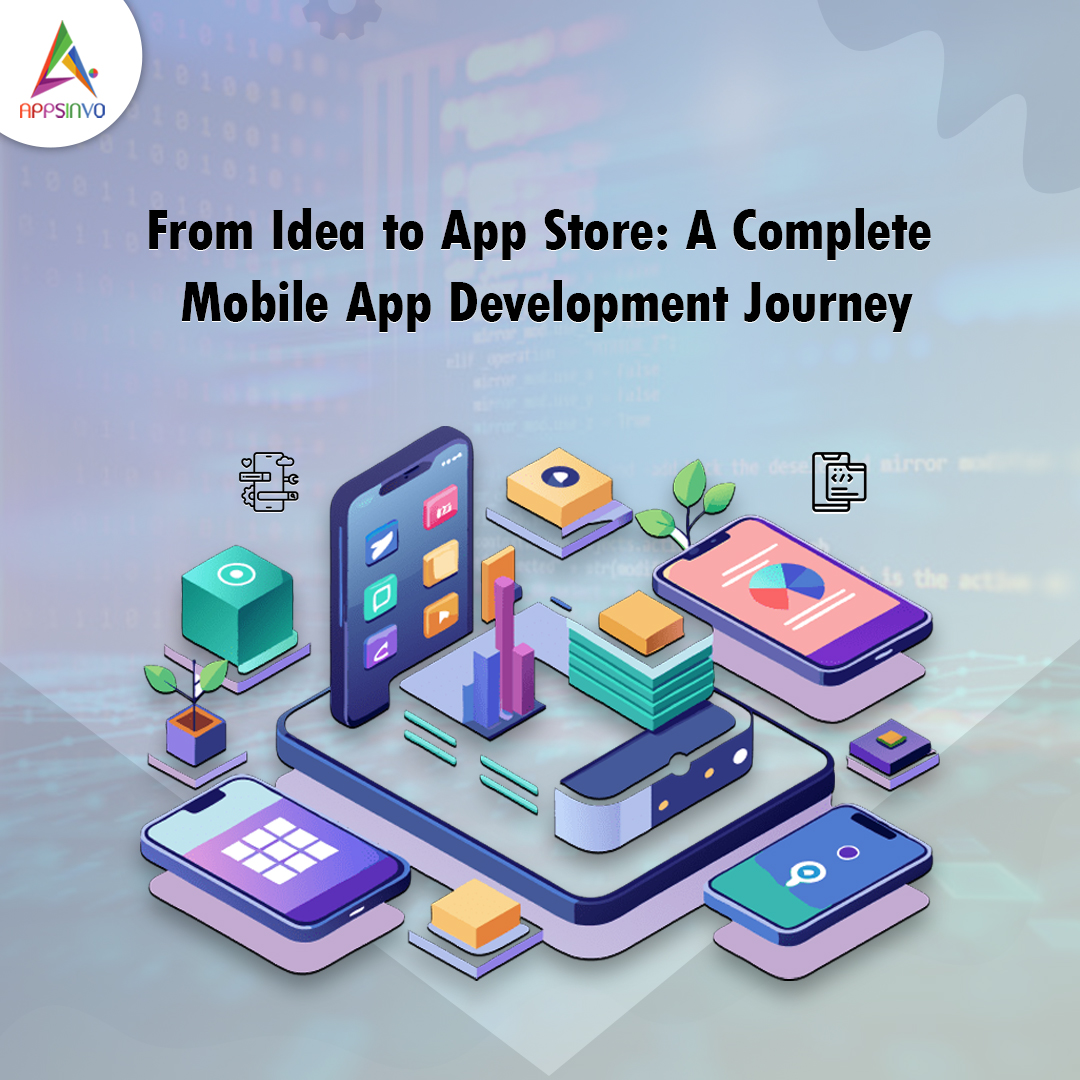
Mobile apps are no longer considered “nice to have.” A well-designed app can help startups, entrepreneurs, and growing businesses enhance customer engagement, increase brand awareness, and streamline operations. However, converting a fantastic concept into a live app on the App Store and Google Play Store involves more than just coding—a disciplined mobile app development process, clear product choices, and dependable execution.
In this tutorial, we’ll walk you through the entire process, from idea validation to deployment, so you know what to expect from a professional mobile app development company like Appsinvo. You will also learn where major App Development Services fit, why each step is important, and how to avoid common errors.
- Reach users with push alerts and personalised experiences.
- Increase loyalty with faster access and simpler onboarding.
- Improve client service with in-app support and self-service processes.
- Increase income through subscriptions, bookings, or in-app transactions.
Before you spend on design or engineering, validate your concept. The aim here is simple: demonstrate demand and determine what distinguishes your software.
What to do?
- Define the problem your app addresses (who has it and why now?)
Develop user personas and journeys. - Use surveys, landing pages, or MVP pilots to test your assumptions.
- Evaluate feasibility: cost, complexity, and team requirements.
- Competitive feature sets and pricing models
- Reviews and user concerns (your opportunity!)
- Users’ expected level of usability
4) Define app goals, features, and target audience.
- Gain new users.
- Reduce operational time for teams.
- Increase repeat sales and reservations.
- Improve retention with improved onboarding.
Feature Planning
- Create a feature list and categorise it.
- MVP essentials
- Should have been for Version 1
- Could have for future versions.
- This stage has a significant impact on your timetable and total app development services scope.
5) Choosing the right platform (Android, iOS, or cross-platform)
- Android App Development: best if your target audience is broader and budgets vary by region.
- iOS App Development: ideal for strong performance expectations and premium audiences.
Cross-platform development
Cross-Platform App Development (like React Native or Flutter) can reduce cost and time by sharing code across platforms.
- Target users and device distribution
- Performance needs
- Budget and time constraints
- Whether you need platform-specific features
A strong team will recommend the best path—not the most expensive one.
6) UI/UX design process and the significance of user experience
- Wireframes: Structure and Navigation
- Prototypes: Clickable User Flows
- Visual Design: branding, typography, icons, and colours.
- Usability checks: Determine if people “get it” quickly.
A professional design approach guarantees that your software is easy to use from the moment it is installed.
7) Mobile app development stages (frontend and backend development)
he build usually involves two major parts:
Frontend (client-side)
What users see and interact with:
- Screens, navigation, forms
- Authentication UI
- Booking/cart/profile workflows
- Real-time interactions and app state management
Backend (server-side)
What powers the app behind the scenes:
- APIs for app functionality
- Database design and data storage
- Authentication, roles, and permissions
- Notifications and integration services
This is where a complete Mobile App Development Process becomes crucial. Frontend and backend must be planned together to avoid rework.
8) Choosing the perfect technological stack.
- Development speed
- Application scalability
- Security and Maintainability
- Long-term expenses.
A reputable mobile app development company will offer a stack depending on your app’s kind, performance requirements, and timetable, balancing new technology with stability.
9) App testing and quality assurance procedures
- Functional testing (features function properly)
- UI/UX testing (flows are intuitive).
- Compatibility testing (various devices and operating system versions)
- Performance testing (load times, responsiveness).
- Regression testing ensures that fresh upgrades do not damage existing features.
Testing lowers the possibility of bad app store ratings caused by bugs or ambiguous user flows.
10) Security and performance enhancements
Security is not an option—especially if your app handles money, personal information, or accounts.
Security Priorities
- Encryption of sensitive data
- Effective API security and access contro
- Secure configuration and vulnerability checks
Efficient media management
Crash report and monitoring
Memory and battery usage enhancements
This combination enhances both the user experience and app dependability.
Once your app is ready, deployment begins.
Google Play Store
- Prepare an Android build (APK/AAB depending on your strategy)
- Configure store listing, permissions, and release track
- Submit for review
Apple App Store
- Prepare iOS build and configure App Store Connect details
- Follow iOS guidelines and policy requirements
- Submit for review
App review can be strict. Many teams delay launch because of missing details or policy issues—so proper preparation matters.
Launching is not the end. Post-launch work includes:
- Bug fixes based on crash reports and user feedback
- Performance improvements
- Feature enhancements
- Regular updates to stay compatible with OS versions
Most successful apps evolve. Your maintenance plan should be part of your roadmap from day one.
The cost and time required depend on the scope, complexity, and platform used.
Typical timeline factors:
- MVP Feature Set and Integrations
- The complexity of backend and real-time functionalities
- Design complexity (basic versus premium UI/UX)
- QA depth and device coverage.
- Compliance requirements (privacy/security, particularly in specific businesses)
Working with a team that sets defined goals allows you to manage both budget and delivery time.
14) Common obstacles in app development and how to solve them.
- Scope creep: Define the MVP and prioritise features early.
- Uncertain user needs: Before designing or building, validate your ideas via study.
- Platform mismatch: Choose a platform depending on the intended users and performance requirements.
- Poor UX: Invest on wireframes and testing, not just graphics.
- Late Security Planning: Treat security as a fundamental necessity.
- Insufficient Quality Assurance: Build a test plan from the start.
The majority of troubles may be avoided with a planned approach from an experienced Custom Mobile App Development partner.
15) Future trends in mobile app development
Mobile app development is evolving quickly. Key trends include:
- More AI-powered personalization and automation
- Enhanced security and privacy-by-design standards
- Better offline experiences and faster sync
- Increased adoption of cross-platform solutions for speed
- AR/VR and advanced sensors for specialized industries
A forward-looking partner can help you design for current needs while staying ready for future growth.
16) Why is hiring the proper mobile app development company important?
- Understand your business goals and not simply features.
- Provide clear planning for design, development, and testing.
- Offer experienced advice on platform selection and cross-platform app development.
- Ensure quality via QA, security checks, and performance optimisation.
- Support you after launch with continued enhancements.
Conclusion
From concept to app store submission, developing a mobile app requires strategic planning, clever design, dependable development, and thorough testing. If you want to get high-performance results, working with specialists is essential—especially when you want a full-cycle App Development Services strategy.
Appsinvo, your trusted team for Android App Development, iOS App Development, Cross-Platform App Development, and Custom Mobile App Development, engineered to scale, can help you turn your concept into a successful app.
FAQs
1) How long does it take to develop a mobile application?
It depends on scale and complexity, but durations generally vary from a few weeks for a basic MVP to several months for feature-rich apps with integrations and rigorous testing.
2) Should I target Android, iOS, or both?
Choose based on your intended audience. If you require a wider reach, Android may be preferred. If you need high-quality user interaction, iOS may be the best option. Many firms use cross-platform to save time and money.
3) What is the minimum viable product (MVP) in mobile app development?
An MVP (Minimum Viable Product) has only the basic features needed to solve the main user problem and swiftly validate demand.
4) Do I require backend development for basic apps?
Backend services are typically required for apps that require login, user data, content updates, payments, or integrations.
5) How does the app store review and approve my app?
Google and Apple both conduct app reviews to ensure functionality and policy compliance. Clear shop listings, appropriate permissions, robust security policies, and proper content labelling all assist in decreasing review delays.