
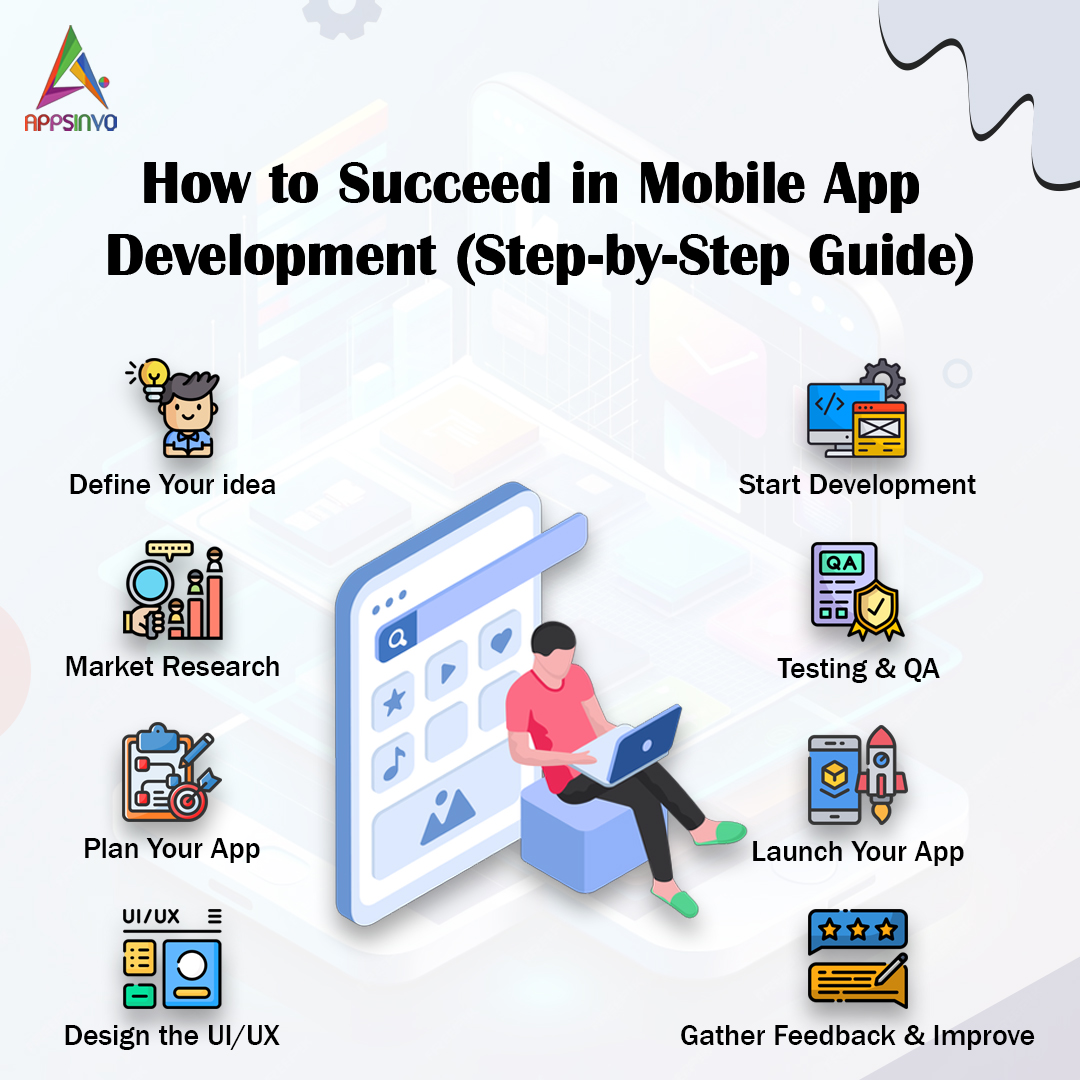
In today’s digital-first world, mobile applications play an important role for organisations aiming to boost consumer engagement, revenue, and brand exposure. However, developing a successful mobile app necessitates more than a fantastic idea. It requires strategic planning, user-centred design, appropriate technology, constant testing, and continual improvement.
Whether you’re a startup, entrepreneur, or existing business, sticking to a tried-and-true development method may dramatically improve your chances of success. This step-by-step book teaches you everything you need to know to create a successful mobile application.
Step 1: Define your app idea and business goals
Every great mobile app begins with a clear aim. Before starting development, decide what problem your app will answer and who it will serve.
Ask yourself:
- What problem does the app address?
- Who are the intended users?
- What makes the app unique?
- How will the app add company value?
Having well-defined goals guides each stage of the development process and ensures that your app is consistent with your entire company plan.
Step 2: Conduct market research
Research is a critical phase in mobile app development. Analyse your competition, recognise industry trends, and comprehend customer expectations.
Focus on:
- Competitor features:
- User Reviews and Feedback
- Market demand
- Industry Challenges
- Revenue Opportunities
This study helps to uncover market gaps and gives ideas on how to design a better product.
Step 3: Select the Right Platform
The best platform for your business is determined by your goals and target audience.
Popular choices include:
- Android Application Development
- iOS App development
- Cross-Platform App Development
- Hybrid App Development
If your target audience utilises numerous devices, cross-platform solutions like Flutter or React Native can help save development expenses while preserving performance.
Step 4: Make a detailed development plan.
A well-structured plan helps to keep your project on track and prevent delays.
Your growth strategy should contain the following:
- Project timeline
- Budget estimate
- Feature prioritisation
- Technology stack
- Development Milestones
- Testing Schedule
- Launch strategy
A comprehensive roadmap ensures that all stakeholders understand the project’s aims and expectations
Step 5: Focus on UI/UX Design
Users want mobile applications to be straightforward, quick, and visually appealing.
An excellent user experience involves:
- Easy navigation.
- Clean interface
- Quick loading speed
- Responsive design
- Accessibility Features
- Consistent branding
Investing in outstanding UI/UX design boosts user satisfaction and fosters long-term engagement.
Step 6: Select the appropriate technology stack
The success of your app is greatly reliant on using contemporary, scalable technology.
- Key technologies can include:
- Flutter
- React Native
- Kotlin
- Swift
- Node.js Laravel
- Firebase
- AWS Google Cloud
Choosing the proper mix keeps your app safe, scalable, and future-ready.
Step 7: Develop an MVP first.
Instead of launching a feature-rich software, create a Minimum Viable Product (MVP).
An MVP provides only the functionality required to prove your idea.
Benefits include:
- Faster launch
- Lower development costs.
- Early consumer comments.
- Reduced project risk.
- Easy improvements
Many successful apps began as basic MVPs and grew into full-featured platforms.
Step 8: Conduct thorough testing
Testing guarantees that your software works smoothly across several devices and operating systems.
Essential testing includes:
- Functional Testing
- Performance Testing
- Security Testing
- Usability Testing
- Compatibility Testing
Regression Testing
Resolving bugs before to launch increases customer happiness and reduces bad ratings.
Step 9: Launch with a Strong Marketing Strategy
Developing a fantastic app is merely the beginning. A successful launch necessitates an effective marketing strategy.
Consider strategies such as:
- App Store Optimization (ASO)
- Social media promotion
- Content marketing
- Influencer partnerships
- Email campaigns
- Paid advertising
- Press releases
A well-planned launch helps attract downloads and increases brand visibility from day one.
Step 10: Continuously monitor performance and improve.
The effort does not cease after the launch. Successful apps adapt to user behaviour and market developments.
Monitor key metrics such as:
- Downloads
- Active users
- Retention Rate
- Session Duration
- Crash reports.
- User Feedback
- Revenue
Regular updates, bug fixes, security enhancements, and feature additions assist to keep users engaged and your software competitive.
Common Mistakes To Avoid
Many firms suffer because they miss important components of app development. Avoid the following typical mistakes:
- Skipping market research
- Ignoring user feedback
- Overloading the first version with unnecessary features
- Choosing outdated technologies
- Neglecting security
- Poor UI/UX design
- Inadequate testing
- Lack of post-launch maintenance
Avoiding these pitfalls can save time, reduce costs, and improve your app’s overall success.
Why Choose Appsinvo for Mobile App Development?
Choosing the proper development partner is equally crucial as having a great app concept. Appsinvo specialises in providing unique mobile app development solutions for organisations of all sizes. From strategy and UI/UX design to development, testing, deployment, and ongoing maintenance, our experienced team uses industry best practices to create secure, scalable, and high-performing applications.
Whether you require an Android app, an iOS app, a cross-platform solution, or an enterprise mobile application, Appsinvo can help you turn your idea into a dependable digital product that supports long-term company success.
Conclusion
Mobile app development success requires meticulous planning, user-centric design, cutting-edge technology, rigorous testing, and ongoing refinement. Businesses that follow a disciplined development process may decrease risks, optimise costs, and produce apps that provide actual value to consumers.
If you’re ready to make your app idea a reality, working with an experienced development company like Appsinvo can help you navigate every step of the way—from concept to launch and beyond. With the correct strategy and execution, your mobile app may be an effective instrument for innovation, consumer engagement, and company success.