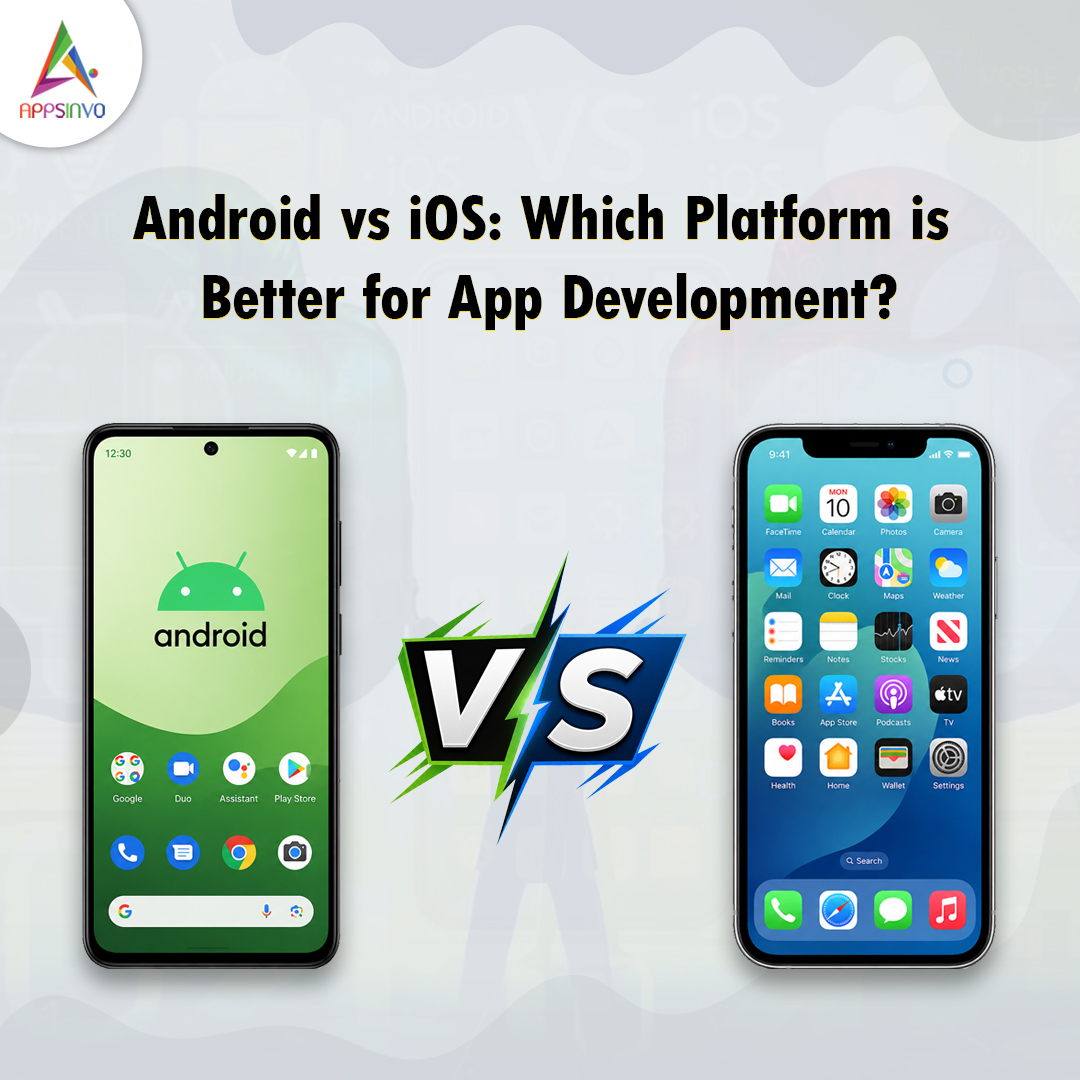
Choosing between Android and iOS is a major choice for every app development project. Both platforms have robust user populations, dependable development environments, and chances for businesses to grow.
However, the “better” platform is determined by your goals, target audience, budget, timeframe, and long-term maintenance plan. In this article, we’ll look at the fundamental distinctions between Android and iOS app development and help you decide which platform is better for your future project.
1. Market Reach and Audience
- Android has a bigger worldwide market share, particularly in emerging markets where smartphone cost is important. This can make Android an excellent choice for apps aimed at a large, cost-sensitive audience. If you want to reach as many people as possible, Android is frequently the best option owing to the sheer quantity of devices and consumers.
- iOS, on the other hand, tends to have a greater concentration of users in premium demographics in North America, Western Europe, and portions of Asia. iOS consumers tend to spend more on paid applications and in-app purchases, which might be advantageous for subscription-based or commerce-focused goods.
Bottom Line:
- Choose Android if you want to reach a large worldwide audience.
- Choose iOS if your monetisation plan is based on increased user spending.
2. Development Languages and Tools.
Android programming is often done in Kotlin or Java, with Android Studio as the major IDE. Swift or Objective-C are commonly used in iOS development, with Xcode serving as the primary tool.
When comparing the tools:
- Android Studio supports flexible testing and device simulation.
- Xcode is intimately linked with Apple’s devices and provides excellent performance profiling.
If your team specialises in a single language, you can save time and money on development. However, many firms employ cross-platform frameworks to reduce effort.
3. UI/UX Consistency
iOS provides a more consistent user experience since Apple owns both the hardware and software ecosystems. Developers often have fewer device fragmentation difficulties. This leads to smoother performance and fewer UI compatibility surprises.
Android is more diverse. Screen widths, resolutions, manufacturer skins, and hardware performance levels all have an influence on an app’s UI and behaviour. Developers frequently require additional testing and customisation to ensure that the experience feels consistent across devices.
Bottom line:
- iOS tends to deliver more consistent UX with less fragmentation.
- Android requires more device-specific testing to ensure uniform quality.
4. Device fragmentation and performance.
Android’s most significant difficulty is fragmentation. Devices differ in:
- Screen size and aspect ratios
- RAM and processor capabilities
- Android version adoption rates
- Manufacturer-specific behaviours
This might result in more testing and development labour. Apps may require adaptive layouts, version-specific compatibility, and performance optimisation for low-end devices.
iOS has fewer versions and hardware classifications, making it simpler to optimise for performance. Developers may target a smaller number of devices with more consistent outcomes.
Bottom Line:
Android complexity increases when your software has to run on many different kinds of devices. If you want consistent performance, iOS is easier.
5. Monetisation Potential
Monetisation tactics vary between platforms:
- iOS users frequently convert better to subscriptions and premium applications.
- Android users have a broader base and, with proper marketing, may generate significant ad income or freemium conversions.
Revenue is also determined by the app’s category. iOS has higher purchase rates for games, productivity apps, and financial tools, but Android excels at utilities, region-specific apps, and high-download consumer applications.
Bottom line: iOS can give higher monetisation per user; however, Android can supply a larger volume.
6. App Store Approval & Rules
Apple’s App Store Review Guidelines are recognised for being stringent.
This might lead to:
- longer review times
- fewer apps published that violate policies
- higher visibility for compliant apps
Android’s Google Play restrictions may be less restrictive in some areas, but developers must still adhere to security and quality standards.
Review time is critical for startups and rapidly growing companies. If you require faster releases, Android may be more adaptable.
7. Costs and Development Budget
App development cost depends on team size, complexity, design quality, and whether you go native or cross-platform.
In general:
- Native iOS programming is efficient due to the platform’s consistency.
- Native Android programming sometimes necessitates more work due to fragmentation.
- Cross-platform tools can save money by sharing code, but they may require platform-specific changes for optimal performance.
Consider the continuing expenditures, such as bug patches, compatibility upgrades, and monitoring. iOS often requires fewer adaptations for device variations, although both systems require frequent upgrades.
8. Marketing & User Acquisition
Marketing methods might differ.
- iOS users may react differently to premium brand communications vs funded efforts.
- Android users frequently originate from a diverse set of demographics and device circumstances.
Your marketing strategy should align with your target demographic. Some firms begin with one platform to confirm demand, then expand after gaining momentum.
9. What Platform Should You Choose?
There is no one-size-fits-all solution. Here’s an easy method to decide:
Select Android if:
- You want maximum worldwide reach.
- Your funding can cover comprehensive device testing.
- Your target audience includes emerging markets.
- You intend massive user acquisition at scale.
Choose iOS if:
- you want stronger monetization per user
- you want consistent performance and UX
- your app targets premium users
- you need faster iteration with fewer device variables
Select Both (or a cross-platform strategy) if:
- You wish to cover all significant users.
- Your product’s value proposition is obvious and scalable.
- Your team can handle multiplatform release and maintenance.
Conclusion
So, which platform is best for app development?. The ideal decision depends on your company’s needs, target audience, and monetisation objectives. Android has a greater reach and enormous growth potential, but it requires more testing owing to device fragmentation. iOS offers a more consistent user experience and frequently generates higher income per user, although it may require tougher review processes.
If you want the most effect, many successful products eventually support both platforms. Begin with the platform that best fits your initial aims, confirm your app concept, and then extend for larger growth.
If you’d like, please inform me about the sort of app you’re developing (e.g., EV app, e-commerce, financial, marketplace, healthcare) and the target location. I can recommend the best method (native Android, native iOS, or cross-platform) for your individual needs.