Mobile apps are no longer considered “nice to have.” They’re increasingly becoming the gateway to client engagement, whether it’s through eCommerce, booking, fintech, customer support, or brand building. But here’s the catch: developing an app is more than simply code. It’s all about determining the best platform for your users, budget, timeframe, and income objectives.
That is why comparing Android and iOS app development is important. The “best” platform is not one-size-fits-all; it is determined by your business model, target audience, and growth strategy. This article will explain what each ecosystem offers, where the trade-offs lie, and how to make an informed decision (even when releasing on both platforms makes sense).
Advantages of Android App Development:
There’s a reason Android is so popular. Startups and entrepreneurs frequently select it because it provides tangible benefits that can immediately affect uptake and profitability.
- Broader audience reach
Android works on a wide range of devices at varying price points, allowing you to reach more prospective users quickly.
- Flexibility and Customisation
Because Android is highly customisable, apps can seamlessly connect with device functions and personalised UI experiences.
- Open ecosystem.
Android’s open-source base supports a diverse set of development tools, integrations, and hardware alternatives.
- Strong monetisation prospects.
Android allows a variety of revenue models, including in-app purchases, subscriptions, and ad monetization—often with a huge number of users to convert.
Market Presence and Reach
Benefits of iOS App Development
- Premium user base.
- Security and privacy focus
Apple is recognised for its stringent app approval processes and robust security architecture.
- Smooth and reliable performance.
iOS devices have fewer hardware variances than Android devices, which can result in a more consistent user experience.
- A robust ecosystem and brand trust
- Higher ROI potential.
Why Businesses Choose iOS:
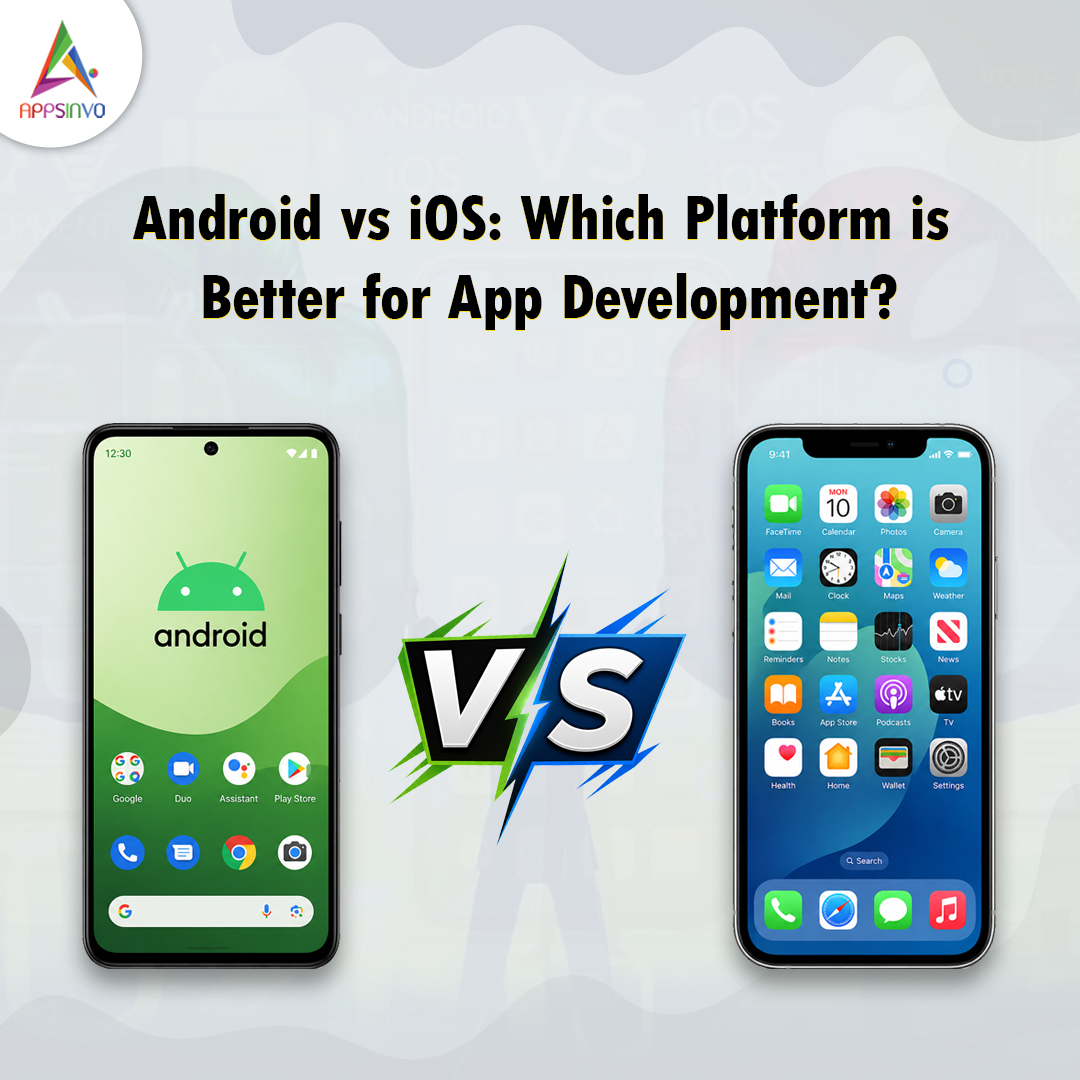
Android compared to iOS App Development: A Detailed Comparison
Here’s a practical mobile app development platform comparison to help you prioritise costs, timing, security, and growth.
Development Cost
- Android: Typically less or more flexible, depending on feature complexity and design requirements. More device variety can increase testing effort.
- iOS: Often significantly higher at first owing to Apple’s ecosystem standards and UI polish requirements, but can be simple if your design is consistent.
Development Time
- Android: It may take longer if you need to support a wide range of screen sizes and device capabilities from day one.
- iOS: Standardisation can be speedier because hardware variety is reduced, but design and approval requirements remain important.
Market Share
- Android: Because of the variety and availability of devices, it typically provides a larger worldwide reach.
- iOS: Smaller worldwide share, but frequently superior success in regions with greater purchasing power.
User Demographics
- Android: More diverse across age groups, income levels, and device pricing tiers.
- iOS: Users who buy paid apps, subscriptions, and premium in-app products are frequently disproportionately represented.
Revenue Generation
- Android: Scalability offers significant revenue potential, particularly with freemium + advertisements or volume-based monetisation.
- iOS: Often, more monetisation per user, particularly in subscription and premium models.
Security
- Android: Security is primarily reliant on device version fragmentation and vendor implementations, however current defences are increasing.
- iOS: In general, security postures are tighter, and review processes are stronger.
App Testing Complexity
- Android: Device fragmentation leads to increased testing complexity.
- iOS: Lower testing complexity across fewer device types, yet compatibility and performance testing remain important.
Customisation Flexibility
- Android: Increased customisation and control, allowing for deeper integration and UI innovation.
- iOS: More consistent UI/UX principles might limit certain customisations while increasing clarity and confidence.
Maintenance
- Android: Due to the multiplicity of device ecosystems, ongoing maintenance can be more complex.
- iOS: Maintenance is easier due to the more standardised environment, although upgrades still require thorough compatibility checks.
Scalability
- Android: Scales effectively for user acquisition across multiple devices and geographies.
- iOS: Scales effectively for high-quality user experiences and consistent performance, particularly with careful release planning.
Quick Table: Key Differences Between Android and iOS
| Category | Android | iOS |
| Primary Strength | Reach and flexibility | Premium experience and ROI |
| Development Approach | Kotlin/Java + diverse devices | Swift + consistent device ecosystem |
| Testing Effort | Higher (device fragmentation) | Moderate (fewer device variants) |
| Monetization | Strong via ads, freemium, volume | Strong via subscriptions and in-app purchases |
| Security | Improving; varies by device | Strong baseline + strict review |
| UI Consistency | More variation across devices | Highly consistent design language |
| Best For | Growth and adoption-first products | Premium products and high-LTV models |
When to Choose Android App Development
Consider Android or iOS for startups with Android first if your business needs:
- Faster audience expansion (especially global or broad market apps)
- Lower-cost entry where you want to validate demand quickly
- Apps that benefit from hardware diversity (camera, sensors, device features across manufacturers)
-
Monetization through scale like:
- Ads
- Freemium models
- High-volume in-app purchases
Business situations in which Android frequently wins
- Marketplaces and consumer apps aimed at price-sensitive people
- Delivery, utility, and productivity applications
- Educational apps seek broad penetration.
- Budget-friendly lifestyle or entertainment apps
If you want to increase acceptance and iteration, an Android app development company can help you launch quickly while developing for a wide range of devices.
When to Choose iOS App Development
Choose iOS app development when your product strategy depends on:
- Higher revenue per user (subscriptions, premium features, paid plans)
- Trust, security, and premium brand perception
- Consistent performance to deliver a polished experience
- Great UX and smooth transitions that match Apple’s design expectations
Ideal iOS use cases
- Finance, health, and security-sensitive apps
- Premium eCommerce experiences and luxury/brand-driven retail
- Subscription-based content platforms
- Apps where user experience quality impacts retention and churn
If you’re building something that customers will pay for—or if ROI is your top priority—an iOS app development company can help you maximize conversion with a high-quality user experience.
Factors to Consider Before Choosing a Platform
When deciding Android vs iOS app development, avoid guessing. Evaluate your app like a business plan:
1) Target Audience
- Where are your users?
- What devices do they typically use?
- Are they likely to pay for value?
2) Business Goals
- Are you optimizing for:
- downloads and adoption?
- revenue and retention?
- brand positioning?
3) Budget
- Your budget affects platform choice, team size, and quality scope.
- Consider what level of testing and UI polish you need.
4) App Features
- Complex features and integrations may influence development time and testing effort.
5) Time to Market
- If launching quickly matters, choose the platform that best fits your timeline.
- Cross-platform can help here (more below).
6) Industry Type
- Some industries naturally align with iOS’s premium user behavior (e.g., subscription-first products).
- Others benefit from Android’s broad device reach.
Should You Choose Android, iOS, or Both?
Many founders ask: “Should I launch on both platforms?” The answer depends on your strategy.
Launching on both makes sense when:
- You already have a proven idea or traction
- Revenue matters quickly, and you can support development + QA demands
- Your app serves a broad consumer base
- You can afford a synchronized release cycle
When launching on one platform is smarter:
- You’re validating product-market fit
- You need to control costs and learn faster
- Your target audience heavily favors one ecosystem
Cross-platform as a smart option
Sometimes Android or iOS for startups becomes a false dilemma. If you want to reduce time and budget while reaching both ecosystems, cross-platform development can be a smart compromise.
Cross-platform is especially useful when:
- Your app’s UI and functionality are not extremely platform-dependent
- You want one codebase (or mostly shared logic)
- You’re aiming to launch quickly and then iterate
Appsinvo often recommends cross-platform routes when they align with business priorities—so you can reduce risk while still serving both audiences.
Why use Appsinvo for your Android, iOS, or cross-platform build?
Choosing a platform is one decision; developing the app effectively is another. Appsinvo is a reputable mobile app development business that offers:
- Android app development.
- iOS app development
- Cross-platform development
- Custom app development services customised to your goals, audience, and timetable.
Whether you’re looking to optimise acquisition on Android, maximise premium revenue on iOS, or launch effectively with cross-platform, Appsinvo can help you plan, design, test, and scale with confidence.
FAQs
1) Which is better for startups, Android or iOS?
It depends on your audience and monetization model. If you want broader reach and faster adoption, Android may be a strong starting point. If you target higher spending users and premium UX, iOS can be more profitable.
2) Is Android app development cheaper than iOS?
Often, Android development can be lower in cost to start, but testing effort can increase due to device fragmentation. iOS can be more straightforward to standardize, so costs vary by project scope.
3) Which platform generates more revenue?
iOS often generates higher revenue per user due to premium purchasing behavior. Android can still outperform in total revenue through larger install volumes—especially with ads and freemium models.
4) Should I launch on both Android and iOS?
If you have budget, a clear market, and traction signals, launching on both can speed growth. If you’re validating the idea, starting with one platform and iterating might be the wiser move.
5) How do I choose the right platform for my app?
Start with:
- target audience device preferences
- your monetization plan
- budget and timeline
- required features and integrations
- Then decide whether single-platform, dual-platform, or cross-platform fits best.
Conclusion: So, Android or iOS—which is better?
The answer to Android vs iOS app development is ultimately strategic.
- Android is often better for reach, flexibility, and rapid user acquisition—especially for apps where scale matters.
- iOS is often better for premium experiences, stronger security, and higher revenue per user—especially for subscription and value-driven models.
- If your priorities are speed and efficiency, cross-platform development can help you launch on time without sacrificing long-term growth.