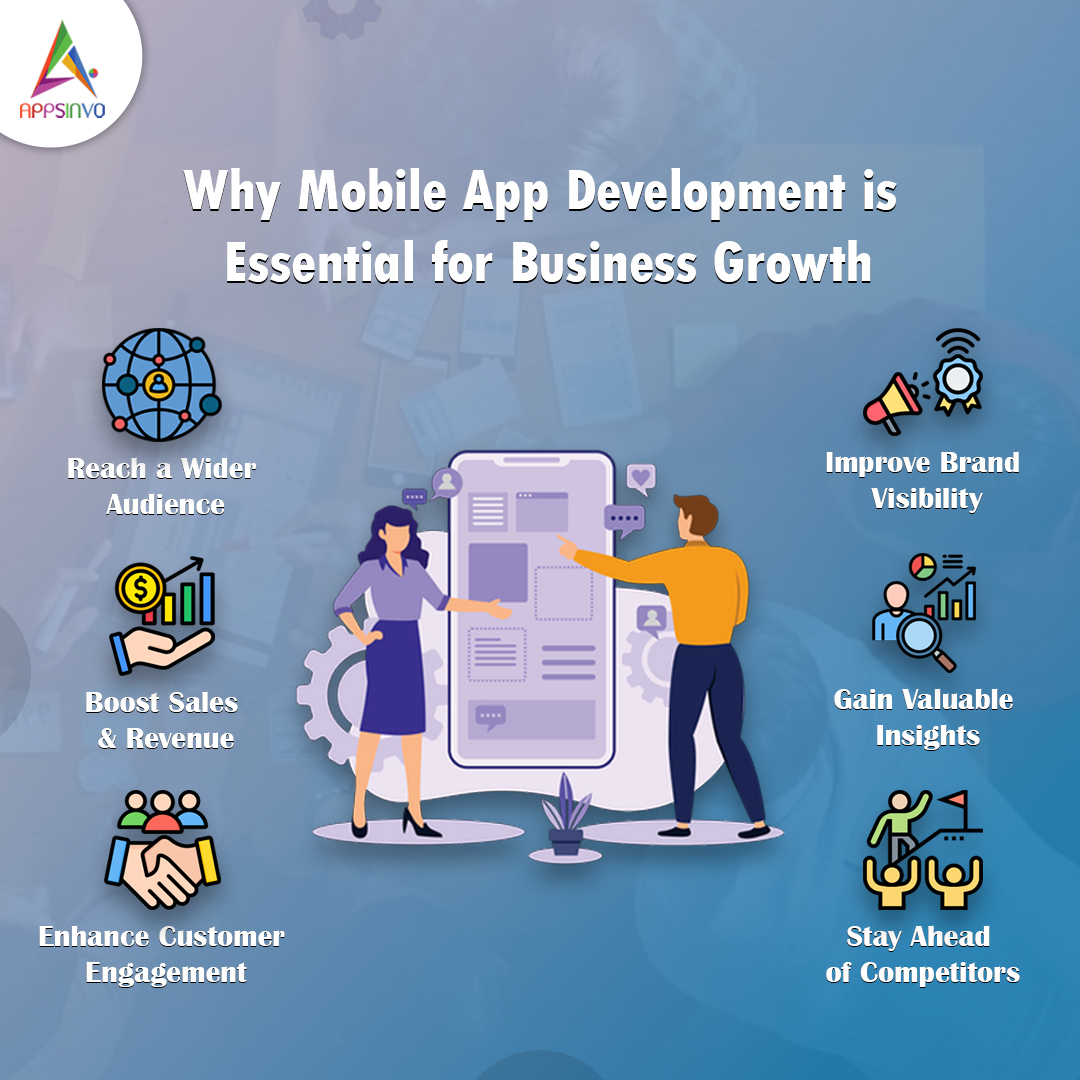
Mobile app development is important for business success because it transforms regular client encounters into consistent, quantifiable experiences. In today’s market, customers increasingly rely on smartphones to find brands, make purchases, obtain help, and interact with services. A well-designed mobile app helps businesses remain competitive by giving speedier access to products and services, strengthening client connections, and opening up new income sources. Instead of competing only through websites or social media posts, businesses may put money directly into their customers’ pockets.
Increased Customer Engagement
Increased client interaction is a major reason why mobile app development leads to growth. Websites are frequently viewed only on rare occasions; however, mobile applications can be utilised on a regular basis. Customers are more likely to return when they have an app that provides convenience, such as rapid ordering, appointment scheduling, membership access, or real-time order monitoring. Push alerts, personalised offers, and in-app messaging enable businesses to engage with customers at the appropriate moment and with relevant material. This engagement increases loyalty and reduces turnover, resulting in higher long-term profitability.
Enhanced Brand Credibility and Trust
Mobile apps also improve brand reputation and trustworthiness. When a company provides a dedicated app, it demonstrates professionalism, consistency, and a dedication to client satisfaction. Many customers link app availability with dependability and quality service. Even small firms can boost confidence by providing services such as customer support chat, simple account management, and transparent updates. As a consequence, firms may get new consumers while keeping current ones happy.
Improved Customer Data for Smarter Decisions
Another significant benefit is the chance to gather vital client information. Mobile applications may monitor user behaviour, such as which screens they visit, how frequently they use specific features, and which things they see or buy. Businesses may use this data to make more informed marketing, product development, and customer service choices. For example, if consumers leave during checkout, the company may improve the flow. If people often seek a certain category, the corporation might make it a priority during promotions. A data-driven strategy minimises guessing and accelerates progress.
Efficiency and Automation
Efficiency and automation are critical drivers of success. Many corporate operations may be simplified with an app. Customers may place orders, pay, schedule services, and update their profiles without the need for lengthy phone conversations or email chains. This decreases operating effort and improves reaction times. For organisations, the consequence is lower costs and faster turnaround times, allowing teams to serve more clients with the same resources. Order confirmations, appointment reminders, and fast receipts are all examples of automation features that help to ensure accuracy.
New revenue opportunities
Mobile apps can provide new business options. Depending on the business model, apps can provide subscriptions, in-app purchases, digital wallets, loyalty programs, and direct-to-consumer sales. They can also work with payment gateways to streamline transactions and eliminate friction. In some businesses, app-based advertising and sponsorship can provide new revenue streams. Apps can help service organisations increase repeat reservations and lessen reliance on walk-ins or manual scheduling.
Improved customer support and less frustration
A great mobile app may increase customer service and minimise bad encounters. When consumers can readily obtain answers, contact support, monitor issues, or access service history, their annoyance level drops. Businesses can include self-service features like FAQs, order tracking, returns management, and ticket filing. Many consumers prefer immediate in-app help over waiting for email responses. This response increases customer happiness, enhances ratings, and promotes word-of-mouth marketing.
Personalisation that improves conversions
Customisation and personalisation enhance the potential of mobile applications. Businesses may customise their content based on user preferences and behaviour. Instead of providing generic marketing messages, applications may promote items, services, and discounts based on individual customers’ preferences. Personalisation increases conversion rates and helps clients feel understood. Over time, personalised experiences help organisations surpass competitors that solely use one-size-fits-all communication.
Competitive advantage in a crowded market.
Finally, mobile applications enable companies a way to keep a competitive advantage in a congested market. Customers compare alternatives rapidly, so firms must stand out via ease and creativity. App development enables businesses to provide unique features such as offline access, real-time updates, augmented reality experiences, live chat, and sophisticated integration. Users are more inclined to return to a business if they receive constant value from its app. App owners may use new technologies to implement features like improved analytics, AI-driven suggestions, and tighter security.
Conclusion
In summary, mobile app development is critical for corporate success because it increases customer engagement, fosters trust, improves operational efficiency, opens up new income streams, and facilitates data-driven decision-making. With the appropriate approach and features, a mobile app may be a long-term growth engine for marketing, revenue, and client retention. Today’s investments in high-quality mobile applications lay the groundwork for long-term growth.