
E-commerce App Development Must-Have Features and Tips

0
31
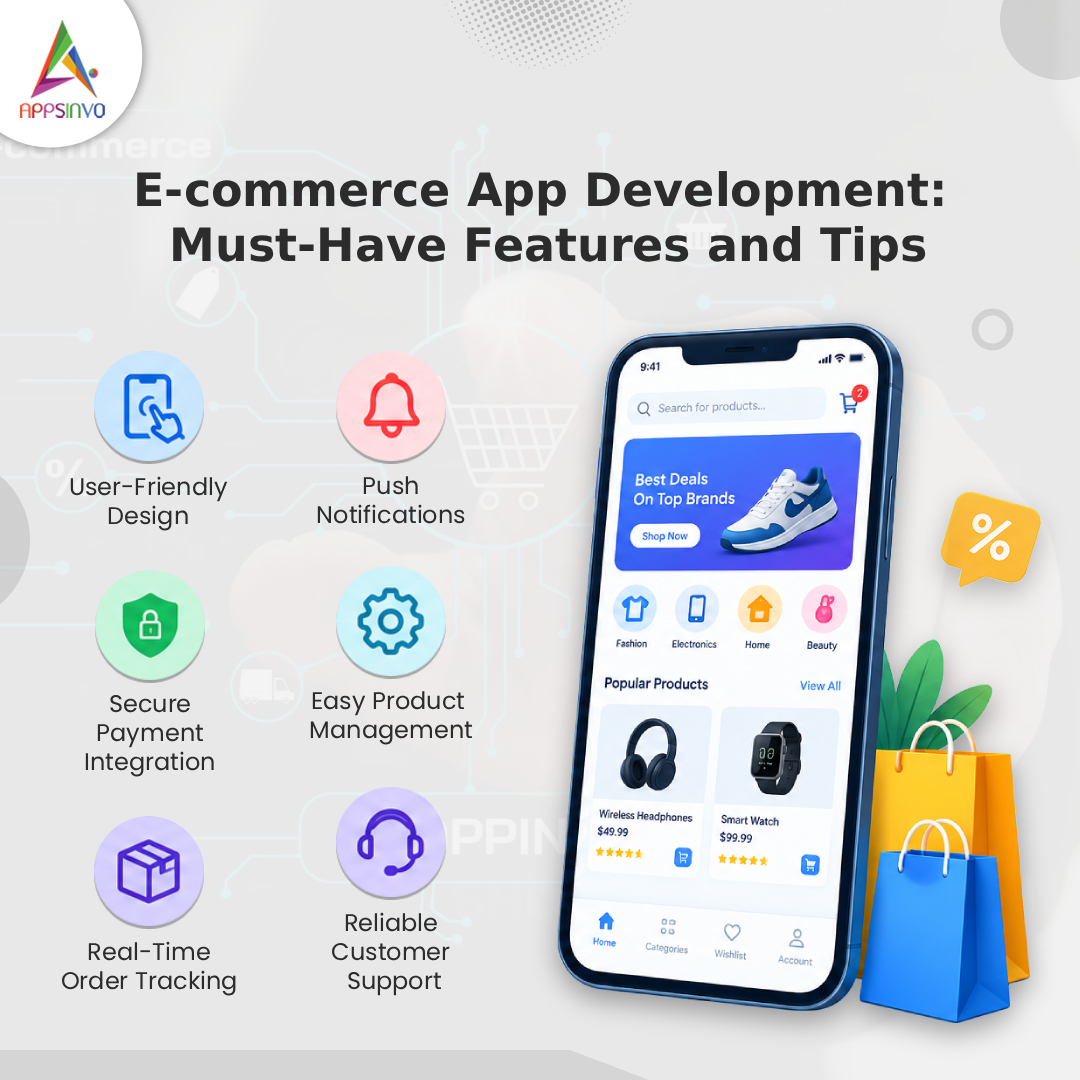
E-commerce App Development Must-Have Features and Tips-banner
Consider the last time you purchased something on your phone. Most likely, you did not launch a browser, enter a URL, and goggle at a tiny desktop layout. You tapped an icon, discovered what you were looking for in a few swipes, and paid in seconds.
That is precisely why more companies are investing in e-commerce apps. But here’s the catch: simply starting an app will not be enough. Shoppers delete slow, unclear, or clumsy apps, and they are rarely given another chance.
At Appsinvo, we’ve worked with businesses of all sizes and observed what distinguishes apps that users love from those that they uninstall. Let’s go over the key features and practical recommendations to help you do it properly.

Must-Have Features for Your E-commerce App

1. Simple onboarding and login.

Nobody wants to fill out a long form to browse around. Allow guests to browse and join up using an email address, phone number, or social media profiles such as Google and Apple. The fewer obstacles at the outset, the more people stick around.

2. Smart Search and Filters.

If clients are unable to find a product fast, they will depart. A powerful search bar, complete with auto-suggestions, spelling correction, and filters (price, size, brand, ratings), makes browsing straightforward. Voice and visual search are also gaining popularity as add-ons.

3. Clear Product Pages

Your product page does the selling. Include high-quality images, short videos, honest descriptions, size guides, stock status, and customer reviews. Zoom and 360-degree views help shoppers feel confident without touching the product.

4. Easy Cart and Wishlist

People often save items to think about later. A wishlist and a cart that remembers items across devices can bring them back to finish the purchase.

5. Fast and Flexible Checkout

This is where the majority of sales are lost. Keep checkout short, allow guest checkout, and securely store addresses and payment information. Support a variety of payment methods, depending on your market, including cards, UPI, net banking, digital wallets, and Buy Now Pay Later.

6. Secure Payment Gateway

Trust is essential when money is involved. Use PCI-DSS-compliant gateways, tokenization, and two-factor authentication to ensure that customers feel secure when making payments.

7. Push notifications

Notifications may be quite effective when used properly. Order updates, price decreases, and back-in-stock alerts all feel useful. Spamming users with everyday promos has the opposite effect; thus, keep them relevant and personal.

8. Order Tracking

“Where is my order?” is one of the most often asked consumer questions. Real-time tracking and delivery updates reduce support requests and increase confidence.

9. Personalized Recommendations

Show shoppers products based on what they browsed, bought, or liked. Personalization can lift both engagement and average order value, and it makes the app feel like it actually knows the customer.

10. Ratings, Reviews, and Q&A

Real feedback from real buyers influences decisions more than any banner ad. Let users post reviews with photos and ask questions about products.

11. Loyalty Points and Offers

Reward programs, referral bonuses, and coupon codes give customers a reason to come back. It’s far cheaper to retain an existing customer than to acquire a new one.

12. Easy Returns and Customer Support

A simple return process and quick support, through live chat or chatbot, can turn a bad experience into a loyal customer.

13. Admin Dashboard

Behind the scenes, you need a powerful dashboard to manage products, inventory, orders, customers, discounts, and analytics in one place.

Practical Tips Before You Build

Start with your audience, not your feature list. Know who you’re selling to, what devices they use, and what frustrates them in other apps. Build around those insights.

Launch with an MVP. You don’t need every feature on day one. Begin with the essentials, collect user feedback, and expand step by step. It saves money and reduces risk.

Prioritize speed. Even a one or two second delay can push users away. Optimize images, use caching, and keep the code lightweight.

Design for thumbs. Most people shop one-handed. Keep important buttons within easy reach, use readable fonts, and avoid cluttered screens.

Choose the right tech stack. Native apps (Swift, Kotlin) offer top performance, while cross-platform tools like Flutter and React Native can reduce time and cost. The right choice depends on your budget and goals.

Plan for scalability. Your app should handle sale-day traffic spikes without crashing. Cloud-based architecture makes growth much smoother.

Don’t skip testing. Test on different devices, screen sizes, and network speeds. A bug found before launch is cheap; one found by customers is expensive.

Use analytics from day one. Track where users drop off, which products perform best, and which campaigns work. Data should guide every update.

Keep improving. An app is never really β€œfinished.” Regular updates, new features, and fresh offers keep users engaged.

Where AI Fits In

AI is no longer a luxury in e-commerce. It powers smarter product recommendations, chatbots that answer questions around the clock, dynamic pricing, demand forecasting, and fraud detection. The best results come when AI supports the human side of the experience instead of replacing it: automation handles the repetitive work, while your team focuses on creativity, service, and relationships.

Final Thoughts

A successful e-commerce app is a mix of smooth design, solid technology, and genuine care for the customer. Get the basics right, listen to your users, and keep evolving.

If you’re planning to build an e-commerce app and want a team that understands both the technical and the business side, Appsinvo is here to help. From idea and design to development, launch, and support, we build scalable, secure, and conversion-focused apps tailored to your brand.

Explore the Following Mobile App Development Blogs:-

πŸ”—Boost App Speed with Smart Compression Methods in Mobile Development
πŸ”—Difference Between Kotlin and Flutter: A Complete App Development Comparison
πŸ”—The Future of Mobile App Development Trends Shaping 2026 and Beyond
πŸ”—Why Mobile App Development is Essential for Business Growth in the Digital Age
πŸ”—Mobile App Optimization: The Power of Data Compression Explained
πŸ”—Flutter vs. React Native: A Detailed Comparison for 2026
πŸ”—Android vs iOS: Which Platform is Better for App Development
πŸ”—How to Succeed in Mobile App Development (Step-by-Step Guide)
πŸ”—The Ultimate Guide to Creating Innovative Mobile Applications
πŸ”—Integrating AI in Mobile Apps: Use Cases, SDKs, and Privacy Considerations
πŸ”—Why Mobile App Development Is Essential for Business Growth
πŸ”—Image and Video Compression in Mobile Apps: A Complete Guide
πŸ”—How Much Does It Cost to Build an App in 2026?
πŸ”—How AI Is Transforming the Future of Mobile App Development
πŸ”—Mobile App Development Strategies for Beginners
πŸ”—Mobile App vs Website: Which Should You Build First
πŸ”—How to Reduce App Size Using Advanced Compression Techniques
πŸ”—How to Win Clients and Boost Sales with Mobile App Development
πŸ”—How to Make Your Mobile App Stand Out in Just 5 Days
πŸ”—3 Ways Social Media Can Impact Your Mobile App Business
πŸ”—From Idea to App Store: A Complete Mobile App Development Journey
πŸ”—Best Compression Strategies for High-Performance Mobile Applications
πŸ”—3 Effective Ways to Accelerate Mobile App Development
πŸ”—5 Things You Should Do Immediately for Mobile App Success
πŸ”—5 Simple Steps to Create an Effective Mobile App Development Strategy
πŸ”—Android vs iOS: Which Platform is Better for App Development?
πŸ”—5 Common Mistakes That Make Mobile App Development a Waste of Time
πŸ”—4 Ways to Boost Creativity in Mobile App Development
πŸ”—5 Easy Ways to Turn Your Mobile App Idea into Success
πŸ”—15 Proven Tips for Mobile App Development Success
πŸ”—3 Easy Ways to Speed Up Healthcare App Development
πŸ”—How to Learn Mobile App Development (Beginner’s Guide)
πŸ”—Android vs iOS App Development: Which is Better for Your Business?
πŸ”—How Custom Mobile App Development Can Boost Your Business Growth
πŸ”—Key Features Every Successful Business App Must Have
πŸ”—The Future of Mobile App Development: Trends to Watch in 2026
πŸ”—Step-by-Step Guide to Developing a Successful Mobile App in 2026
πŸ”—The Importance of App Testing: Ensuring Quality in Mobile Development
πŸ”—Top Features Every Leading Mobile App Development Company Offers
πŸ”—Choosing the Right Technology Stack for Your Mobile App
πŸ”—Β How to Optimize Your Mobile App for Performance and User Experience
πŸ”—Β On-Demand App Development: Why It’s Growing Rapidly in 2026
πŸ”—Β Mobile App Development Lifecycle: From Planning to Deployment
πŸ”—Β The Future of Mobile Apps: AI and Machine Learning Integration
πŸ”—Β What Is the Cost of Designing a Mobile App?
πŸ”—Why Cross-Platform App Development is a Smart Choice in 2026
πŸ”—Β Common Mistakes to Avoid in Mobile App Development
πŸ”—Β The Complete Guide to Google Play App Store Optimization for Android Apps in 2025
πŸ”—Β Building a Mobile App from Scratch
πŸ”—Β Mobile App Development Company Growth Strategies in India
πŸ”—Β Latest Top 10 UX/UI Tools Used For App Design
πŸ”—Β Roles of Mobile App Consulting Services for Your Business App
πŸ”—Β Top Techniques to Build and Develop the Best Mobile App for Business
πŸ”—Β What Are the Basics of Mobile App Development?
πŸ”—Β How to Choose the Right Mobile App Development Company
πŸ”—Β Top 15+ Tools for Building a Mobile App
πŸ”—Β How Does User Experience Impact Mobile App Development?
πŸ”—Β What are the Best Practices for Mobile App Development?
πŸ”—Β 6 Benefits of Outsourcing to a Mobile App Development Company
πŸ”—Β The Impact of Technology on Mobile App Development Companies in India
πŸ”—Β What are the Key Considerations for Mobile App Creation?
πŸ”—Β Mobile App Development Company Growth Strategies in India
πŸ”—Β What are the Best Practices for Mobile App Development?
πŸ”— How Does User Experience Impact Mobile App Development?
πŸ”— What Are the Basics of Mobile App Development?
πŸ”— How to Choose the Right Mobile App Development Company in 2024
πŸ”— 10 Essential Steps for Mobile App Development
πŸ”— How Can Mobile App Development Benefit Your Business?
πŸ”—10 Reasons to Invest in a Top Mobile App Development Company in India
πŸ”—Β Top Trends in Mobile App Development for 2024
πŸ”—List of Top 10 Mobile App Development Frameworks in 2024
πŸ”—Exploring the Future of Augmented Reality in Mobile App Development
πŸ”—Β Challenges of Enterprise Mobile App Development
πŸ”—Β Top Mobile App Development Using Angular Frameworks
πŸ”—Β Why IoT is the Future Of Mobile App Development?
πŸ”— Significance of DevOps in Mobile App Development
πŸ”— Worst Mobile App Development Mistakes to Avoid
πŸ”—Β Factors That Affect the Success of Web & Mobile App Development
πŸ”—Β Cloud-Native App: The Future of Mobile App Development
πŸ”— Stages of Cross-Platform Mobile App Development
πŸ”—Β Important Points to Follow for Mobile App Development
πŸ”—Β Benefits of Integrating IoT into Mobile App Development Process
πŸ”—Β Progressive Web Apps- A New Trend of Mobile App Development
πŸ”—Β Points You Must Consider While Mobile App Development
πŸ”—Β What is the Future of Mobile App Development

LEAVE A REPLY

Please enter your comment!
Please enter your name here