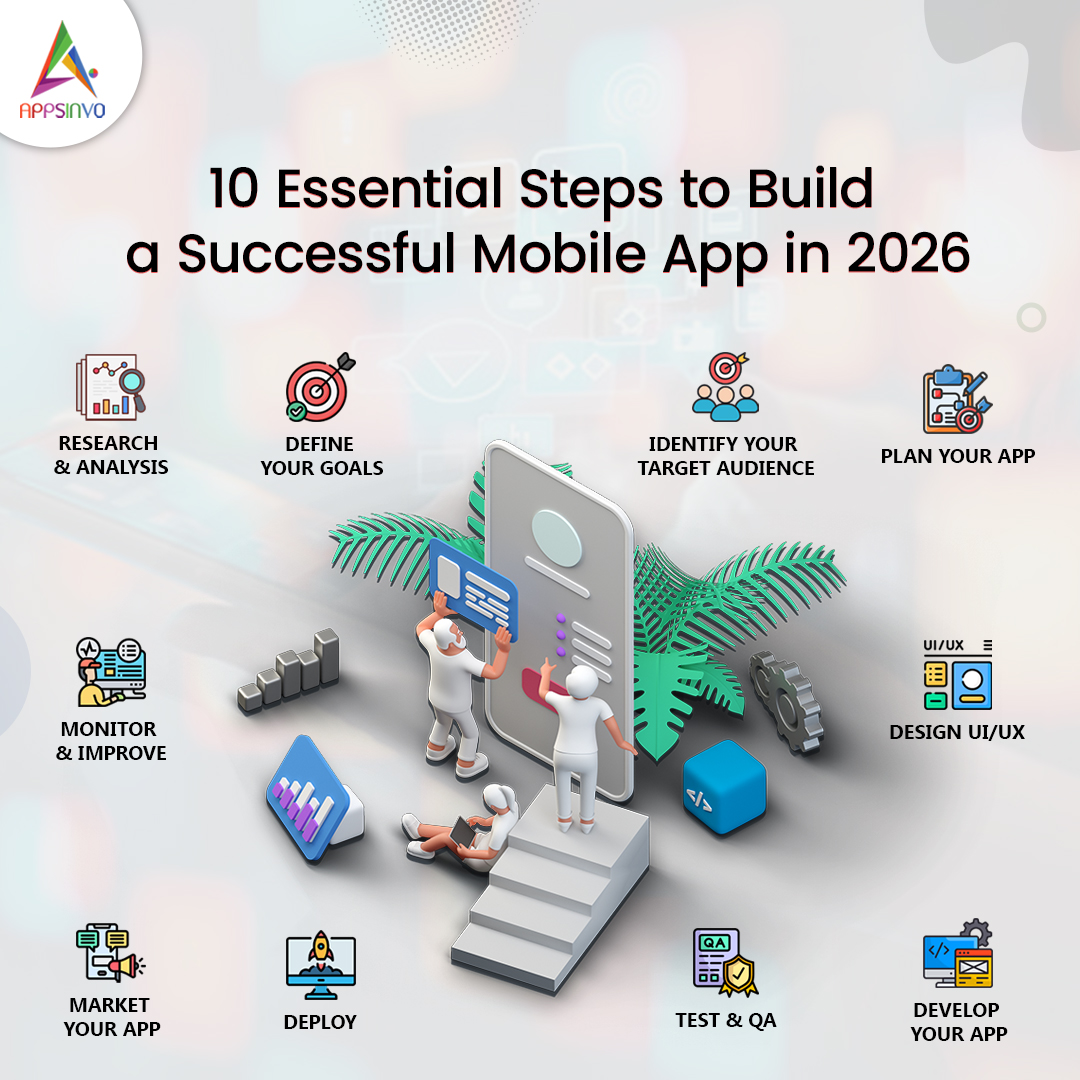
10 Essential Steps to Build a Successful Mobile App in 2026

0
150
10-Essential-Steps-to-Build-a-Successful-Mobile-App-in-2026-banner
Mobile apps are among the most straightforward ways for organisations to expand in 2026. Customers find companies on their phones, want fast experiences, and frequently prefer the businesses that feel the most personalised, safe, and user-friendly. Simultaneously, the current app development ecosystem is rapidly evolvingβ€”AI-assisted experiences, smarter personalisation, cloud-based scalability, voice-enabled interactions, and more stringent security requirements are influencing how successful applications are produced.
Whether you’re a startup testing a new concept, an SME increasing retention, or an enterprise modernising a platform, your route to success requires more than “just coding.” You require a structured app development process that balances company objectives with user value, quality, and long-term maintenance. The following are the ten critical phases for planning and executing mobile app development in 2026.

Step 1: Define Your App Idea and Business Goals

Before you invest in UI, functionality, or a technological stack, determine what your app will accomplish. The most effective mobile application development initiatives begin with clear business objectives tied to measurable outcomes.

Ask yourself:

  • What problem does the app address for users?
  • Which business KPIs will improve? (For example, conversions, repeat sales, support ticket decrease, reservations)
  • Who are the buyers and who are the end users?
  • What is the app’s “core promise” (a single sentence)?

Practical example:

If you’re developing a fitness app for SMEs that provide coaching services, your aim may be: “Increase lead conversions from 2% to 4% by enabling personalised onboarding and booking.”
Clear goals enable you to make more informed decisions about features, budget, and timelinesβ€”all of which are critical components of mobile app development services and long-term execution.

Step 2: Research Your Target Audience and Market

Even the best concept will fail if it does not match actual user behaviour. In 2026, user expectations are influenced by personalisation, seamless performance, and trust signals; thus, market research must be realistic and continuous.
Market research should cover:
  • User demographics, behaviors, and motivations
  • Pain points and β€œjobs to be done”
  • Platform preferences (iOS, Android, or both)
  • Willingness to pay and competitor alternatives

Tip: Interview potential users and validate with lightweight prototypes. A small discovery effort often prevents costly redesigns during mobile application development


Step 3: Analyze Competitors and Identify Opportunities

Competitive analysis isn’t about copyingβ€”it’s about finding gaps and differentiation opportunities.

Look for:
  • Feature sets and onboarding flows
  • UX friction points (where users complain or churn)
  • Pricing models (subscriptions, one-time fees, freemium)
  • Performance and reliability patterns
  • Security and trust cues (policies, permissions, transparency)
Opportunity areas in 2026 may include:
  • Better onboarding and faster time-to-value
  • Improved personalization
  • More accessible interfaces
  • More secure data handling and clearer consent flows

This step helps a mobile app development company position your product with a clear β€œwhy us” for customers.


Step 4: Choose the Right Features and Technology Stack

Next, pick what and how to develop. In 2026, teams will increasingly rely on adaptable infrastructures that enable growth, analytics, and growing AI/ML capabilities.
Feature prioritization approach:
  • Define a Minimum Viable Product (MVP) that delivers the core value
  • Add β€œnice-to-have” features later based on real usage
  • Ensure each feature ties back to a goal
Technology stack considerations:
  • Platform strategy: native (iOS/Android) vs cross-platform
  • Backend requirements: APIs, authentication, and integrations
  • Data needs: analytics, personalization inputs, and storage
  • Scalability and maintainability
For example, many teams are considering cross-platform alternatives to accelerate delivery while keeping code manageable for future updates. For sophisticated personalisation or AI-powered features, you’ll also require a backend integration strategy and a model lifecycle.
An excellent app development process strikes a balance between speed and quality while avoiding overbuilding. Next, pick what and how to develop. In 2026, teams will increasingly rely on adaptable infrastructures that enable growth, analytics, and growing AI/ML capabilities.

Step 5: Create a User-Friendly UI/UX Design

In 2026, β€œusable” isn’t enough. Users expect clarity, speed, accessibility, and personalization cues. UI/UX design directly impacts conversion rates, retention, and app ratings.

UX priorities:

  • Fast onboarding and clear navigation
  • Simple, predictable interactions
  • Accessible design (legibility, contrast, readable forms)
  • Personalization-aware UI (e.g., tailored recommendations or settings)

Practical design tip:

Create user flows for the top 3–5 tasks (e.g., sign up, browse, book, purchase, contact support). Then prototype and test early. Poor UX is one of the most common mobile app development mistakesβ€”and it’s costly to fix after development.

Step 6: Develop and Integrate Essential App Features

Now it’s time to build. Your app should be engineered for stability, performance, and an easy path to future improvements.
Essential feature categories typically include:
  • Authentication and user profiles
  • Core workflows tied to your business goals
  • Push notifications or in-app messaging (used thoughtfully)
  • Analytics for tracking engagement and outcomes
  • Backend integration (payments, CRM, ERP, third-party APIs, etc.)
Modern enhancement ideas (use responsibly):
  • AI-powered recommendations (where it genuinely improves decisions)
  • Voice-enabled functionality for specific use cases
  • Smarter search and content ranking using machine learning approaches
The key is to ensure these capabilities don’t degrade reliability or privacy. Your mobile application development should remain user-first, not feature-first.

Step 7: Implement Security, Privacy, and Data Protection

As mobile apps handle more sensitive data, enhanced security becomes a competitive advantage rather than merely a compliance tick.
Security practices to plan for:
  • Secure authentication and session handling
  • Encryption for sensitive data in transit and at rest
  • Strong authorization rules (what users can access)
  • Secure storage for tokens and credentials
  • Privacy-by-design: collect only what you need, be transparent
  • Regular security testing and vulnerability management
In 2026, users and enterprise buyers increasingly evaluate apps based on trust and data protection. This is especially important for health, fintech, e-commerce, and any app processing personal information.

Step 8: Evaluate the app’s performance, usability, and bugs

Testing is where “it works on my phone” stops. A successful mobile app launch requires extensive testing across devices and real-life environments.

Test areas to include:

  • Functional testing (core workflows)
  • Usability testing (real user behavior)
  • Performance testing (loading times, responsiveness)
  • Compatibility testing (different OS versions and screen sizes)
  • Security testing (data handling, permission flows)
  • Regression testing for updates
Tip: In addition to automated tests, include exploratory testing for edge cases. Insufficient testing is another major cause of app instability after release.

Step 9: Launch the App on the Right Platforms

Choose your launch strategy based on your audience and operational readiness. In many cases, launching on both iOS and Android makes sense, but it depends on your users and resources.

Launch planning should include:

  • App Store / Google Play optimization (metadata, screenshots, descriptions)
  • Clear onboarding to reduce early churn
  • Monitoring setup (crashes, latency, key events)
  • Beta testing or staged rollout to reduce risk
  • Support readiness (customer service workflows, issue tracking)

Voice-enabled features, personalization, or IoT integration should also be tested carefully in real conditions before broad release.


Step 10: Monitor, Maintain, and Continuously Improve the App

The app isn’t β€œdone” at launch. Continuous improvement is how you stay competitive in 2026 and maximize ROI.

What to monitor:
  • User engagement and retention trends
  • Crash reports and performance bottlenecks
  • Funnel metrics (activation, conversion, churn reasons)
  • Feature usage (what people actually use)
  • Feedback from reviews and support tickets
Ongoing maintenance includes:
  • Bug fixes and performance improvements
  • Updates for OS changes
  • Security patches
  • New features based on validated user needs

A mobile app development company that offers ongoing support helps you protect uptime, improve user experience, and evolve the product responsibly.


2026 Trends Shaping Mobile App Development

While every app is different, these trends are influencing how teams approach mobile application development in 2026:

  • AI-powered features: such as recommendations, summarization, or smarter assistanceβ€”implemented with reliability and privacy in mind.
  • Machine learning for personalization: using user behavior signals to tailor content and experiences.
  • Cloud technology for scalability: enabling faster growth, better data synchronization, and resilient backends.
  • IoT integration: for apps connected to devices and real-world monitoring (e.g., smart equipment or sensors).
  • Cross-platform development: helping teams ship faster while maintaining consistent quality.
  • Voice-enabled functionality: where it adds clear value (hands-free tasks, accessibility, faster inputs).
  • Advanced app security: improving trust with stronger encryption, permission transparency, and safer data handling.

    Why Choose Appsinvo for Mobile App Development?

    When you partner with Appsinvo, you’re not just hiring developersβ€”you’re building with a team experienced in delivering outcomes for startups, SMEs, and enterprises.

    Appsinvo supports modern mobile app development with:

    • Customized mobile application development strategies aligned to your goals
    • Expertise in Android and iOS, plus modern cross-platform solutions like Flutter and React Native
    • Capability to implement AI/ML-powered features where they add real user value
    • A delivery approach focused on scalability, performance, secure architecture, and a polished user experience
    • Ongoing support to help you improve after launch

    Whether you need custom mobile app development for a new product or mobile app development services to enhance an existing app, Appsinvo helps your team build a roadmap that is realistic, measurable, and built for long-term growth.


Why Choose Appsinvo for Mobile App Development?

When you partner with Appsinvo, you’re not just hiring developersβ€”you’re building with a team experienced in delivering outcomes for startups, SMEs, and enterprises.

Appsinvo supports modern mobile app development with:
  • Customized mobile application development strategies aligned to your goals
  • Expertise in Android and iOS, plus modern cross-platform solutions like Flutter and React Native
  • Capability to implement AI/ML-powered features where they add real user value
  • A delivery approach focused on scalability, performance, secure architecture, and a polished user experience
  • Ongoing support to help you improve after launch

Whether you need custom mobile app development for a new product or mobile app development services to enhance an existing app, Appsinvo helps your team build a roadmap that is realistic, measurable, and built for long-term growth.


Practical Tips to Avoid Common Mobile App Development Mistakes

o protect your timeline and budget, avoid these frequent pitfalls:

  • Clarify requirements early: write down the goals, users, and must-have features before development starts.
  • Don’t compromise UX: test onboarding and key flows with real users to prevent early churn.
  • Don’t ignore security: plan authentication, encryption, and privacy-by-design from day one.
  • Skip insufficient testing: include functional, performance, usability, and regression testing.
  • Launch without a plan: combine release planning with marketing, analytics, and maintenance so you can respond quickly.

A solid app development process reduces rework and increases the chance your product meets user expectations.


FAQs

1. How can I develop a successful mobile app in 2026?

Begin with clear business goals, study users and competitors, design user-friendly UX, create an MVP with important features, add strong security, rigorously test, launch on the appropriate platforms, and constantly improve using actual statistics and feedback.

2. How much will it cost to produce a mobile app in 2026?

The cost is determined by the app’s complexity, features, platform strategy (iOS/Android), UI/UX design scope, integrations, technological stack, team makeup, and ongoing maintenance requirements. The most precise estimate is obtained by a scoped discovery phase.


3. Which technology is best for mobile app development?

There’s no universal β€œbest” for every business. Native (Android/iOS), Flutter, and React Native can all be strong options depending on performance needs, timeline, budget, and how often you expect to scale or add features.

4. How long does it take to build a mobile app?

Timelines vary based on MVP scope, design complexity, backend readiness, integrations, testing needs, and review cycles. Many teams aim for an MVP first, then iterate with additional releases.

5. Why should businesses hire a professional mobile app development company?

Professional mobile app developers bring proven architecture, UX discipline, testing rigor, and security best practicesβ€”reducing risk, improving performance, and speeding up delivery compared to ad-hoc development.

Contact Appsinvo for a Customized Mobile App Development Solution

Appsinvo is here to help if you’re planning mobile app development in 2026 and need a clear, dependable route from idea to launch (and beyond). Contact Appsinvo immediately for a consultation and a customised mobile app development strategy based on your company’s goals, users, and timeframe.

Explore the Following Mobile App Development Blogs:-

πŸ”—Boost App Speed with Smart Compression Methods in Mobile Development
πŸ”—Difference Between Kotlin and Flutter: A Complete App Development Comparison
πŸ”—The Future of Mobile App Development Trends Shaping 2026 and Beyond
πŸ”—Why Mobile App Development is Essential for Business Growth in the Digital Age
πŸ”—Mobile App Optimization: The Power of Data Compression Explained
πŸ”—Flutter vs. React Native: A Detailed Comparison for 2026
πŸ”—Android vs iOS: Which Platform is Better for App Development
πŸ”—How to Succeed in Mobile App Development (Step-by-Step Guide)
πŸ”—The Ultimate Guide to Creating Innovative Mobile Applications
πŸ”—Integrating AI in Mobile Apps: Use Cases, SDKs, and Privacy Considerations
πŸ”—Why Mobile App Development Is Essential for Business Growth
πŸ”—Image and Video Compression in Mobile Apps: A Complete Guide
πŸ”—How Much Does It Cost to Build an App in 2026?
πŸ”—How AI Is Transforming the Future of Mobile App Development
πŸ”—Mobile App Development Strategies for Beginners
πŸ”—Mobile App vs Website: Which Should You Build First
πŸ”—How to Reduce App Size Using Advanced Compression Techniques
πŸ”—How to Win Clients and Boost Sales with Mobile App Development
πŸ”—How to Make Your Mobile App Stand Out in Just 5 Days
πŸ”—3 Ways Social Media Can Impact Your Mobile App Business
πŸ”—From Idea to App Store: A Complete Mobile App Development Journey
πŸ”—Best Compression Strategies for High-Performance Mobile Applications
πŸ”—3 Effective Ways to Accelerate Mobile App Development
πŸ”—5 Things You Should Do Immediately for Mobile App Success
πŸ”—5 Simple Steps to Create an Effective Mobile App Development Strategy
πŸ”—Android vs iOS: Which Platform is Better for App Development?
πŸ”—5 Common Mistakes That Make Mobile App Development a Waste of Time
πŸ”—4 Ways to Boost Creativity in Mobile App Development
πŸ”—5 Easy Ways to Turn Your Mobile App Idea into Success
πŸ”—15 Proven Tips for Mobile App Development Success
πŸ”—3 Easy Ways to Speed Up Healthcare App Development
πŸ”—How to Learn Mobile App Development (Beginner’s Guide)
πŸ”—Android vs iOS App Development: Which is Better for Your Business?
πŸ”—How Custom Mobile App Development Can Boost Your Business Growth
πŸ”—Key Features Every Successful Business App Must Have
πŸ”—The Future of Mobile App Development: Trends to Watch in 2026
πŸ”—Step-by-Step Guide to Developing a Successful Mobile App in 2026
πŸ”—The Importance of App Testing: Ensuring Quality in Mobile Development
πŸ”—Top Features Every Leading Mobile App Development Company Offers
πŸ”—Choosing the Right Technology Stack for Your Mobile App
πŸ”— How to Optimize Your Mobile App for Performance and User Experience
πŸ”— On-Demand App Development: Why It’s Growing Rapidly in 2026
πŸ”— Mobile App Development Lifecycle: From Planning to Deployment
πŸ”— The Future of Mobile Apps: AI and Machine Learning Integration
πŸ”— What Is the Cost of Designing a Mobile App?
πŸ”—Why Cross-Platform App Development is a Smart Choice in 2026
πŸ”— Common Mistakes to Avoid in Mobile App Development
πŸ”— The Complete Guide to Google Play App Store Optimization for Android Apps in 2025
πŸ”— Building a Mobile App from Scratch
πŸ”— Mobile App Development Company Growth Strategies in India
πŸ”— Latest Top 10 UX/UI Tools Used For App Design
πŸ”— Roles of Mobile App Consulting Services for Your Business App
πŸ”— Top Techniques to Build and Develop the Best Mobile App for Business
πŸ”— What Are the Basics of Mobile App Development?
πŸ”— How to Choose the Right Mobile App Development Company
πŸ”— Top 15+ Tools for Building a Mobile App
πŸ”— How Does User Experience Impact Mobile App Development?
πŸ”— What are the Best Practices for Mobile App Development?
πŸ”— 6 Benefits of Outsourcing to a Mobile App Development Company
πŸ”— The Impact of Technology on Mobile App Development Companies in India
πŸ”— What are the Key Considerations for Mobile App Creation?
πŸ”— Mobile App Development Company Growth Strategies in India
πŸ”— What are the Best Practices for Mobile App Development?
πŸ”— How Does User Experience Impact Mobile App Development?
πŸ”— What Are the Basics of Mobile App Development?
πŸ”— How to Choose the Right Mobile App Development Company in 2024
πŸ”— 10 Essential Steps for Mobile App Development
πŸ”— How Can Mobile App Development Benefit Your Business?
πŸ”—10 Reasons to Invest in a Top Mobile App Development Company in India
πŸ”— Top Trends in Mobile App Development for 2024
πŸ”—List of Top 10 Mobile App Development Frameworks in 2024
πŸ”—Exploring the Future of Augmented Reality in Mobile App Development
πŸ”— Challenges of Enterprise Mobile App Development
πŸ”— Top Mobile App Development Using Angular Frameworks
πŸ”— Why IoT is the Future Of Mobile App Development?
πŸ”— Significance of DevOps in Mobile App Development
πŸ”— Worst Mobile App Development Mistakes to Avoid
πŸ”— Factors That Affect the Success of Web & Mobile App Development
πŸ”— Cloud-Native App: The Future of Mobile App Development
πŸ”— Stages of Cross-Platform Mobile App Development
πŸ”— Important Points to Follow for Mobile App Development
πŸ”— Benefits of Integrating IoT into Mobile App Development Process
πŸ”— Progressive Web Apps- A New Trend of Mobile App Development
πŸ”— Points You Must Consider While Mobile App Development
πŸ”— What is the Future of Mobile App Development

LEAVE A REPLY

Please enter your comment!
Please enter your name here