In this article, we explain both options in clear terms so you can choose the one that best fits your needs.
What Is a Native App?
A native app is built specifically for one platform, using that platform’s own programming languages and tools.
- iOS apps are built with Swift or Objective-C
- Android apps are built with Kotlin or Java
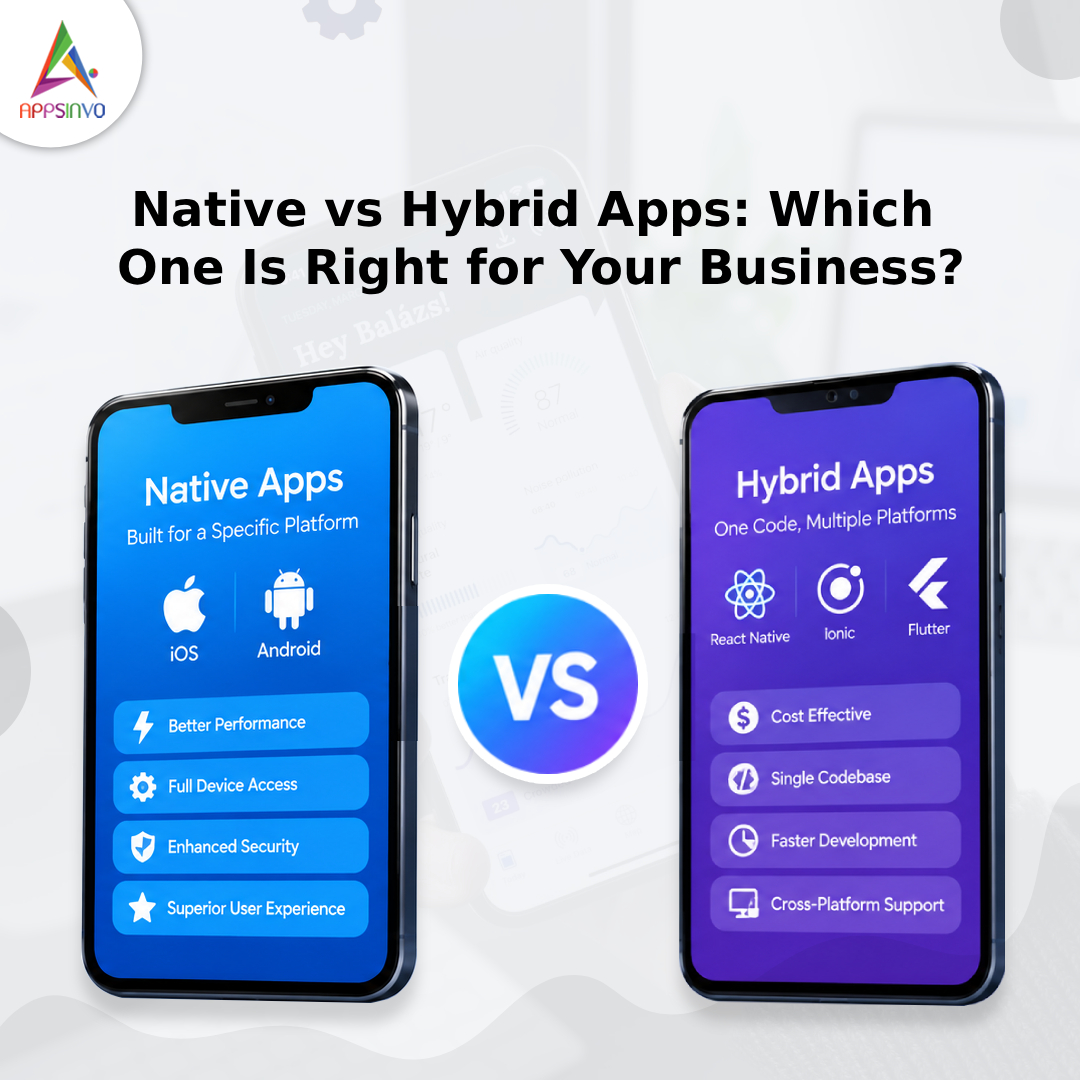
Because the app is made for a single operating system, it can use the device’s hardware and features (camera, GPS, sensors, biometrics, push notifications) directly and efficiently.
Examples: Banking apps, high-end games, fitness trackers, and apps that rely on heavy animations or real-time processing.
Advantages of Native Apps
- Best performance: Faster load times, smoother animations, and fewer lags.
- Superior user experience: The app follows each platform’s design guidelines, so it feels natural to users.
- Full access to device features: No limits when using the camera, Bluetooth, AR, or the latest OS updates.
- Stronger security: Platform-level security tools make it easier to protect sensitive data.
- Better stability and scalability: Ideal for complex, feature-rich products.
Disadvantages of Native Apps
- Higher cost: You need two separate codebases for iOS and Android.
- Longer development time: Two apps usually mean two timelines.
- More maintenance effort: Every update has to be built and tested twice.
What Is a Hybrid App?
A hybrid app is built once and runs on multiple platforms. Developers write a single codebase and deploy it to both iOS and Android. Popular frameworks include Flutter, React Native, Ionic, and Xamarin.
Modern hybrid (often called cross-platform) frameworks have come a long way. Today, they can deliver near-native performance for a large number of business use cases.
Examples: eCommerce apps, booking platforms, on-demand service apps, content apps, internal business tools, and MVPs.
Advantages of Hybrid Apps
- Cost-effective: One codebase means lower development and maintenance costs.
- Faster time to market: Launch on both platforms at the same time.
- Easier updates: Push changes once and they reflect everywhere.
- Wider reach: Reach iOS and Android users together from day one.
- Great for MVPs: Test your idea in the market without a huge upfront investment.
Disadvantages of Hybrid Apps
- Slightly lower performance: Very graphics-heavy or processing-intensive apps may not run as smoothly.
- Limited access to some native features: Certain advanced device capabilities may need custom native modules.
- Dependence on the framework: You rely on the framework’s updates and community support.
Native vs Hybrid: Quick Comparison
| Factor | Native App | Hybrid App |
| Performance | Excellent | Good to very good |
| Development cost | Higher | Lower |
| Time to market | Longer | Faster |
| Codebase | Separate for iOS and Android | Single shared codebase |
| User experience | Fully platform-specific | Consistent across platforms |
| Device feature access | Complete | Mostly complete, may need plugins |
| Maintenance | More effort | Easier |
| Best for | Complex, high-performance apps | MVPs, budget-friendly, multi-platform apps |
Which One Should You Choose?
There is no universal winner. The right choice depends on your goals. Ask yourself these questions:
- What is your budget? If you have a limited budget and want to reach both platforms, hybrid is usually the smarter start. If budget is flexible and quality is the top priority, native is worth the investment.
- How quickly do you need to launch? Need to hit the market fast or validate an idea? Hybrid helps you get there sooner.
- How complex is your app? Apps with advanced graphics, AR/VR, real-time video, or heavy hardware integration generally perform best as native apps.
- Who is your target audience? If most of your users are on one platform, a native app for that platform may be enough. If your audience is split across both, hybrid can cover them efficiently.
- What are your long-term plans? Think about future features, scalability, and maintenance. Some businesses begin with hybrid to test the market and move to native as they grow.
When to Choose Native
Go native if you are building:
- High-performance gaming or media apps
- Apps with AR/VR or advanced animations
- Fintech and banking apps needing top-level security
- Products that depend heavily on device hardware
When to Choose Hybrid
Go hybrid if you are building:
- An MVP or a startup product to test the market
- eCommerce, booking, or on-demand service apps
- Content, social, or educational apps
- Business apps where speed and budget matter most
Final Thoughts
Native apps give you unmatched performance and a polished platform-specific experience. Hybrid apps give you speed, savings, and wider reach. Neither is “better” on its own; what matters is how well the approach matches your business goals, users, and budget.
If you are still unsure, a short consultation with an experienced development partner can save you months of effort and a lot of money.
Build Your App with Appsinvo
At Appsinvo, we are a professional web and mobile app development company helping startups and enterprises build scalable, secure, and user-friendly apps. Whether you need a high-performance native app or a cost-efficient hybrid solution using Flutter or React Native, our team will guide you to the right choice and deliver it with quality.
Have an app idea? Let’s discuss it. Contact Appsinvo today for a free consultation and take the first step toward launching your app.