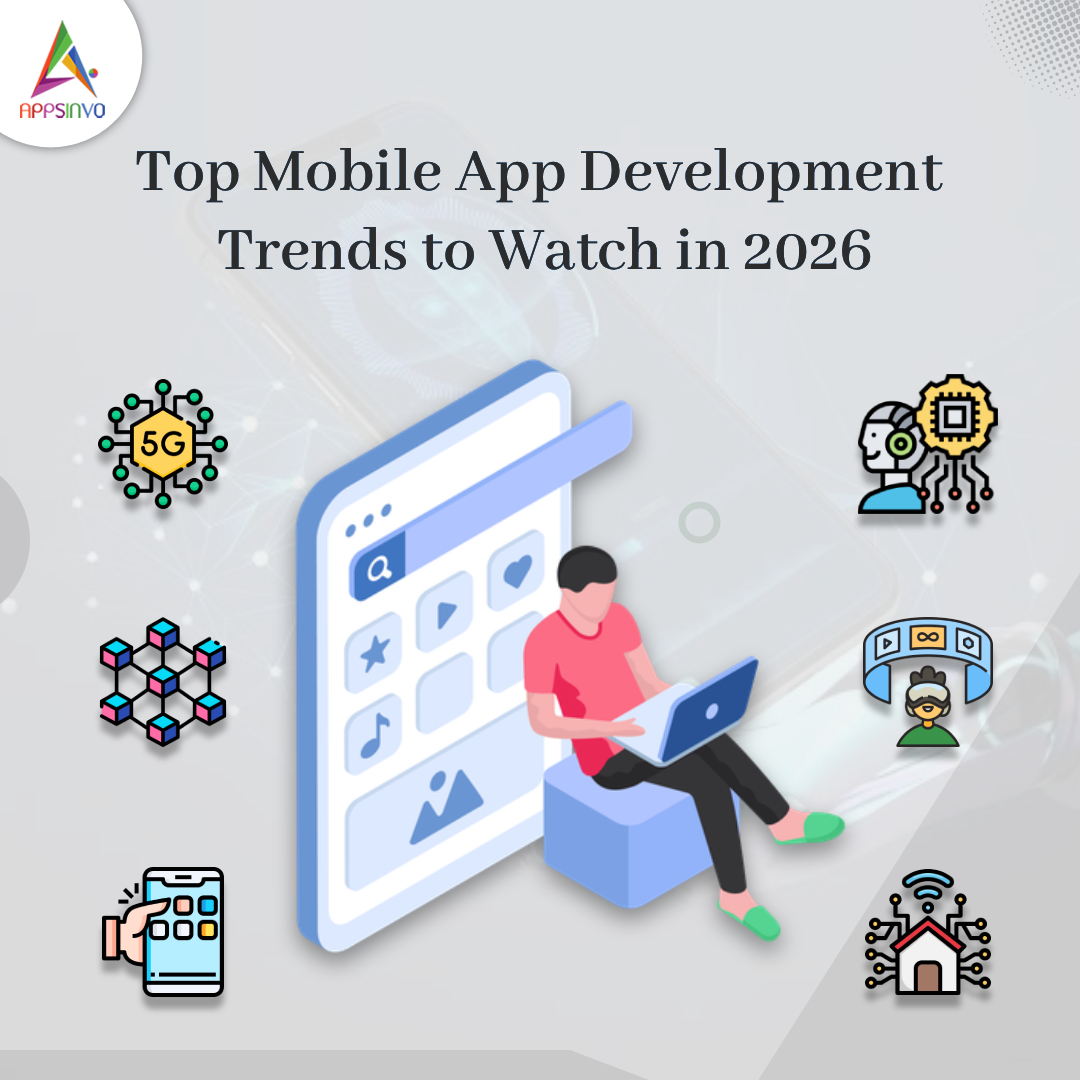
Top Mobile App Development Trends to Watch in 2026

0
10
mobile app development trends, app development 2026
Mobile applications are no longer simply a digital extension of a business. Many businesses rely solely on their apps. As we approach 2026, consumer expectations are stronger than ever: quicker, smarter, safer, and more personalised experiences across all screens.
At Appsinvo, we work with startups and organisations across industries, and we see strong similarities between what people want and what technology can now deliver. Here are the themes that we predict will influence mobile app development in 2026 and beyond.

1. Agentic AI: Apps That Act, Not Just Answer

Chatbots were the first wave. The next is AI agents that complete tasks on the user’s behalf. Instead of showing a list of flights, a travel app can compare options, apply the user’s preferences, and prepare a booking for one-tap approval.

What it means for your business: Think beyond adding a chat window. Identify the multi-step tasks your customers find tedious and design an AI-driven flow that handles them.

2. On-Device AI for Speed and Privacy

Modern smartphones now ship with powerful neural processors, so many AI features can run directly on the device instead of in the cloud. This means faster responses, lower server costs, offline functionality, and sensitive data that never leaves the phone.

What it means for your business: Features like smart search, image recognition, and personalized recommendations can feel instant while respecting user privacy.

3. Hyper-Personalization

Users have grown used to apps that seem to understand them. In 2026, personalization goes deeper than “Hello, [Name].” Apps adapt layouts, content, pricing, notifications, and even onboarding flows based on behavior, context, and time of day.

What it means for your business: Strong analytics foundations and clean data pipelines are the starting point. Without them, personalization stays superficial.

4. Super Apps and Mini-App Ecosystems

The super app model, where one app hosts payments, services, shopping, and more, continues to spread beyond its Asian origins. Many brands are building mini-app ecosystems where partners and third parties can plug in their own services.

What it means for your business: Even if you’re not building a full super app, a modular architecture lets you add new services quickly without rebuilding your product.

5. Privacy-First and Security-by-Design Development

Data protection regulations are tightening worldwide, and users are more cautious about what they share. Trust is now a competitive advantage. Expect wider adoption of passkeys, biometric authentication, transparent consent flows, and data minimization.

What it means for your business: Security can’t be an afterthought at the end of the project. Build it into architecture, code reviews, and testing from day one.

6. Cross-Platform Development Comes of Age

Frameworks like Flutter, React Native, and Kotlin Multiplatform have matured to the point where they deliver near-native performance for most use cases. Businesses can now reach iOS and Android faster and with a more efficient budget.

What it means for your business: For many products, especially MVPs and growth-stage apps, cross-platform is a smart default. Reserve fully native development for performance-critical or hardware-heavy features.

7. Spatial Computing, AR, and Immersive Experiences

Augmented reality is moving from novelty to utility. Virtual try-ons, furniture placement, guided repairs, and immersive product demos are becoming standard in retail, real estate, education, and healthcare. Growing interest in spatial computing devices is pushing this further.

What it means for your business: Start with a focused AR use case that solves a real customer problem, like “see it in your room” before buying, rather than adding AR for its own sake.

8. Voice and Multimodal Interfaces

Users increasingly mix voice, text, camera, and touch in a single interaction. Point the camera at a product, ask a question out loud, and get a visual answer. Multimodal design makes apps more accessible and more natural to use.

What it means for your business: Design interactions around user intent rather than a single input method, and make accessibility a core requirement rather than an add-on.

9. Connected Ecosystems: Wearables, IoT, and 5G

Apps are becoming the control center for a wider set of devices, including smartwatches, health trackers, smart home products, connected cars, and industrial sensors. Faster networks and edge computing make real-time experiences smoother.

What it means for your business: Plan for multi-device experiences early. A great app in 2026 often extends beyond the phone screen.

10. Low-Code Acceleration and AI-Assisted Development

Development teams are using AI coding assistants, automated testing, and low-code tools to shorten build cycles. This doesn’t replace skilled engineers. It frees them to focus on architecture, user experience, and complex logic.

What it means for your business: Faster time to market is achievable, but quality, scalability, and security still depend on experienced developers guiding the process.

11. Sustainable and Ethical App Design

Energy-efficient code, lighter apps, dark mode options, and responsible data practices are gaining attention. Users, and increasingly regulators, are paying attention to the environmental and ethical footprint of digital products.

What it means for your business: Efficient apps load faster, drain less battery, and cost less to run, so sustainability and performance often go hand in hand.

How to Prepare Your App Strategy for 2026

Trends are only useful when they connect to real business goals. Before adopting any technology, ask:

  • What problem does it solve for my users?
  • Does it fit my product stage and budget?
  • Can my architecture support it as I scale?
  • How will I measure success?

The best results come from choosing two or three trends that genuinely fit your audience, and executing them well.

Build Your Future-Ready App with Appsinvo

Whether you’re launching a new product or modernizing an existing one, Appsinvo helps you turn these trends into working solutions. Our team combines strategy, design, and engineering to build mobile apps tailored to your business goals.

Ready to build something exceptional in 2026? Get in touch with Appsinvo for a free consultation and let’s discuss your idea.

Explore the Following Mobile App Development Blogs:-

πŸ”—Boost App Speed with Smart Compression Methods in Mobile Development
πŸ”—Difference Between Kotlin and Flutter: A Complete App Development Comparison
πŸ”—The Future of Mobile App Development Trends Shaping 2026 and Beyond
πŸ”—Why Mobile App Development is Essential for Business Growth in the Digital Age
πŸ”—Mobile App Optimization: The Power of Data Compression Explained
πŸ”—Flutter vs. React Native: A Detailed Comparison for 2026
πŸ”—Android vs iOS: Which Platform is Better for App Development
πŸ”—How to Succeed in Mobile App Development (Step-by-Step Guide)
πŸ”—The Ultimate Guide to Creating Innovative Mobile Applications
πŸ”—Integrating AI in Mobile Apps: Use Cases, SDKs, and Privacy Considerations
πŸ”—Why Mobile App Development Is Essential for Business Growth
πŸ”—Image and Video Compression in Mobile Apps: A Complete Guide
πŸ”—How Much Does It Cost to Build an App in 2026?
πŸ”—How AI Is Transforming the Future of Mobile App Development
πŸ”—Mobile App Development Strategies for Beginners
πŸ”—Mobile App vs Website: Which Should You Build First
πŸ”—How to Reduce App Size Using Advanced Compression Techniques
πŸ”—How to Win Clients and Boost Sales with Mobile App Development
πŸ”—How to Make Your Mobile App Stand Out in Just 5 Days
πŸ”—3 Ways Social Media Can Impact Your Mobile App Business
πŸ”—From Idea to App Store: A Complete Mobile App Development Journey
πŸ”—Best Compression Strategies for High-Performance Mobile Applications
πŸ”—3 Effective Ways to Accelerate Mobile App Development
πŸ”—5 Things You Should Do Immediately for Mobile App Success
πŸ”—5 Simple Steps to Create an Effective Mobile App Development Strategy
πŸ”—Android vs iOS: Which Platform is Better for App Development?
πŸ”—5 Common Mistakes That Make Mobile App Development a Waste of Time
πŸ”—4 Ways to Boost Creativity in Mobile App Development
πŸ”—5 Easy Ways to Turn Your Mobile App Idea into Success
πŸ”—15 Proven Tips for Mobile App Development Success
πŸ”—3 Easy Ways to Speed Up Healthcare App Development
πŸ”—How to Learn Mobile App Development (Beginner’s Guide)
πŸ”—Android vs iOS App Development: Which is Better for Your Business?
πŸ”—How Custom Mobile App Development Can Boost Your Business Growth
πŸ”—Key Features Every Successful Business App Must Have
πŸ”—The Future of Mobile App Development: Trends to Watch in 2026
πŸ”—Step-by-Step Guide to Developing a Successful Mobile App in 2026
πŸ”—The Importance of App Testing: Ensuring Quality in Mobile Development
πŸ”—Top Features Every Leading Mobile App Development Company Offers
πŸ”—Choosing the Right Technology Stack for Your Mobile App
πŸ”—Β How to Optimize Your Mobile App for Performance and User Experience
πŸ”—Β On-Demand App Development: Why It’s Growing Rapidly in 2026
πŸ”—Β Mobile App Development Lifecycle: From Planning to Deployment
πŸ”—Β The Future of Mobile Apps: AI and Machine Learning Integration
πŸ”—Β What Is the Cost of Designing a Mobile App?
πŸ”—Why Cross-Platform App Development is a Smart Choice in 2026
πŸ”—Β Common Mistakes to Avoid in Mobile App Development
πŸ”—Β The Complete Guide to Google Play App Store Optimization for Android Apps in 2025
πŸ”—Β Building a Mobile App from Scratch
πŸ”—Β Mobile App Development Company Growth Strategies in India
πŸ”—Β Latest Top 10 UX/UI Tools Used For App Design
πŸ”—Β Roles of Mobile App Consulting Services for Your Business App
πŸ”—Β Top Techniques to Build and Develop the Best Mobile App for Business
πŸ”—Β What Are the Basics of Mobile App Development?
πŸ”—Β How to Choose the Right Mobile App Development Company
πŸ”—Β Top 15+ Tools for Building a Mobile App
πŸ”—Β How Does User Experience Impact Mobile App Development?
πŸ”—Β What are the Best Practices for Mobile App Development?
πŸ”—Β 6 Benefits of Outsourcing to a Mobile App Development Company
πŸ”—Β The Impact of Technology on Mobile App Development Companies in India
πŸ”—Β What are the Key Considerations for Mobile App Creation?
πŸ”—Β Mobile App Development Company Growth Strategies in India
πŸ”—Β What are the Best Practices for Mobile App Development?
πŸ”— How Does User Experience Impact Mobile App Development?
πŸ”— What Are the Basics of Mobile App Development?
πŸ”— How to Choose the Right Mobile App Development Company in 2024
πŸ”— 10 Essential Steps for Mobile App Development
πŸ”— How Can Mobile App Development Benefit Your Business?
πŸ”—10 Reasons to Invest in a Top Mobile App Development Company in India
πŸ”—Β Top Trends in Mobile App Development for 2024
πŸ”—List of Top 10 Mobile App Development Frameworks in 2024
πŸ”—Exploring the Future of Augmented Reality in Mobile App Development
πŸ”—Β Challenges of Enterprise Mobile App Development
πŸ”—Β Top Mobile App Development Using Angular Frameworks
πŸ”—Β Why IoT is the Future Of Mobile App Development?
πŸ”— Significance of DevOps in Mobile App Development
πŸ”— Worst Mobile App Development Mistakes to Avoid
πŸ”—Β Factors That Affect the Success of Web & Mobile App Development
πŸ”—Β Cloud-Native App: The Future of Mobile App Development
πŸ”— Stages of Cross-Platform Mobile App Development
πŸ”—Β Important Points to Follow for Mobile App Development
πŸ”—Β Benefits of Integrating IoT into Mobile App Development Process
πŸ”—Β Progressive Web Apps- A New Trend of Mobile App Development
πŸ”—Β Points You Must Consider While Mobile App Development
πŸ”—Β What is the Future of Mobile App Development

LEAVE A REPLY

Please enter your comment!
Please enter your name here