
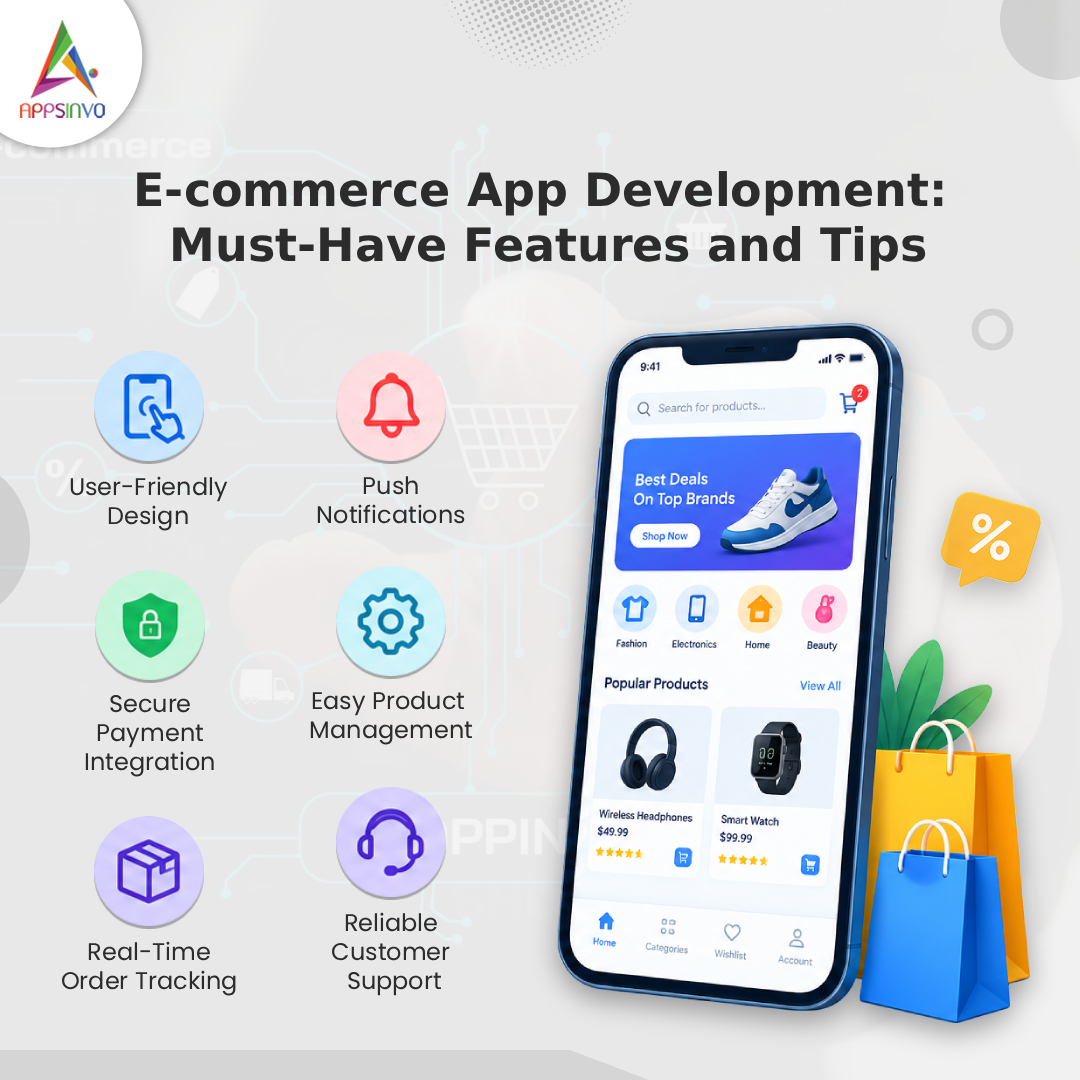
Must-Have Features for Your E-commerce App
1. Simple onboarding and login.
2. Smart Search and Filters.
3. Clear Product Pages
Your product page does the selling. Include high-quality images, short videos, honest descriptions, size guides, stock status, and customer reviews. Zoom and 360-degree views help shoppers feel confident without touching the product.
4. Easy Cart and Wishlist
People often save items to think about later. A wishlist and a cart that remembers items across devices can bring them back to finish the purchase.
5. Fast and Flexible Checkout
6. Secure Payment Gateway
7. Push notifications
8. Order Tracking
9. Personalized Recommendations
Show shoppers products based on what they browsed, bought, or liked. Personalization can lift both engagement and average order value, and it makes the app feel like it actually knows the customer.
10. Ratings, Reviews, and Q&A
Real feedback from real buyers influences decisions more than any banner ad. Let users post reviews with photos and ask questions about products.
11. Loyalty Points and Offers
Reward programs, referral bonuses, and coupon codes give customers a reason to come back. It’s far cheaper to retain an existing customer than to acquire a new one.
12. Easy Returns and Customer Support
A simple return process and quick support, through live chat or chatbot, can turn a bad experience into a loyal customer.
13. Admin Dashboard
Behind the scenes, you need a powerful dashboard to manage products, inventory, orders, customers, discounts, and analytics in one place.
Practical Tips Before You Build
Start with your audience, not your feature list. Know who you’re selling to, what devices they use, and what frustrates them in other apps. Build around those insights.
Launch with an MVP. You don’t need every feature on day one. Begin with the essentials, collect user feedback, and expand step by step. It saves money and reduces risk.
Prioritize speed. Even a one or two second delay can push users away. Optimize images, use caching, and keep the code lightweight.
Design for thumbs. Most people shop one-handed. Keep important buttons within easy reach, use readable fonts, and avoid cluttered screens.
Choose the right tech stack. Native apps (Swift, Kotlin) offer top performance, while cross-platform tools like Flutter and React Native can reduce time and cost. The right choice depends on your budget and goals.
Plan for scalability. Your app should handle sale-day traffic spikes without crashing. Cloud-based architecture makes growth much smoother.
Don’t skip testing. Test on different devices, screen sizes, and network speeds. A bug found before launch is cheap; one found by customers is expensive.
Use analytics from day one. Track where users drop off, which products perform best, and which campaigns work. Data should guide every update.
Keep improving. An app is never really “finished.” Regular updates, new features, and fresh offers keep users engaged.
Where AI Fits In
AI is no longer a luxury in e-commerce. It powers smarter product recommendations, chatbots that answer questions around the clock, dynamic pricing, demand forecasting, and fraud detection. The best results come when AI supports the human side of the experience instead of replacing it: automation handles the repetitive work, while your team focuses on creativity, service, and relationships.
Final Thoughts
A successful e-commerce app is a mix of smooth design, solid technology, and genuine care for the customer. Get the basics right, listen to your users, and keep evolving.
If you’re planning to build an e-commerce app and want a team that understands both the technical and the business side, Appsinvo is here to help. From idea and design to development, launch, and support, we build scalable, secure, and conversion-focused apps tailored to your brand.