
A mobile app can help a business serve customers, simplify operations, and open new revenue opportunities. But a promising idea alone does not guarantee a successful product. Rushed decisions during planning, design, development, or launch can result in wasted budget, poor reviews, security risks, and an app people stop using.
Understanding the common mobile app development mistakes early can help startups, entrepreneurs, and established businesses make better choices. Whether you are planning Android and iOS app development or a cross-platform product, a thoughtful process puts user needs and business goals at its centre.
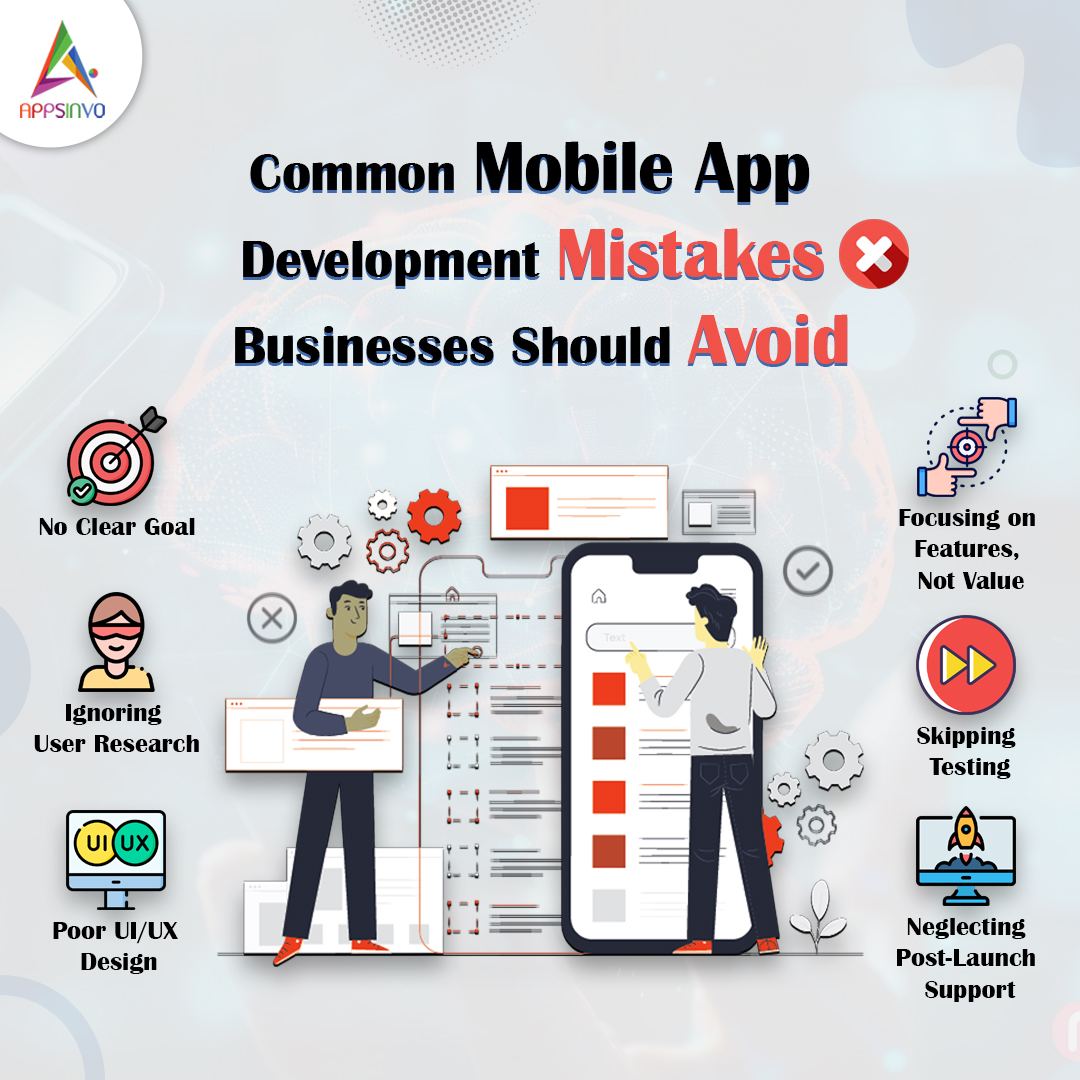
Common Mobile App Development Mistakes to Avoid
1. Not defining clear app goals and objectives
Without clear goals, it is difficult to decide what the app should do or how to measure success. A business might want more repeat purchases, faster bookings, or better access to a service—but those goals call for different features and metrics.
How to avoid it: Define the problem the app will solve, who it will serve, and what success looks like. Set measurable objectives, such as completed bookings or improved customer retention, before development begins.
2. Ignoring market research and competitor analysis
Skipping research can lead to building an app that duplicates existing options or overlooks what users actually need. Assumptions about customer behaviour can become expensive once development is underway.
How to avoid it: Speak with prospective users, review competitor apps, and identify unmet needs. Research should inform your value proposition and help you prioritise features—not simply add more ideas to the roadmap.
3. Neglecting user experience and interface design
A confusing sign-up flow, cluttered screens, or hard-to-find actions can frustrate users even when the underlying technology works well. Attractive visuals alone are not enough: the app must also be easy to navigate.
How to avoid it: Map key user journeys before designing screens. Create wireframes and prototypes, then test them with representative users. A thoughtful UI/UX design approach can make important tasks clearer and more accessible.
4. Choosing the wrong technology stack
Technology choices affect performance, development cost, maintenance, and the ability to add features later. A stack selected without regard to the product’s requirements may create avoidable limitations.
How to avoid it: Compare native Android and iOS development with cross-platform options such as Flutter or React Native. Consider your users, required device features, budget, timeline, and long-term plans. An experienced mobile app development partner can help evaluate the trade-offs.
5. Overlooking app security and data privacy
Apps may handle personal details, payments, or business data. Treating security as a final checklist item can expose users and organisations to avoidable risks.
How to avoid it: Plan for security from the start. Use secure authentication, protect data in transit and at rest, limit access to sensitive information, and review third-party integrations. Collect only the data the app needs, and make privacy practices clear to users.
6. Adding too many features to the first release
Trying to launch with every possible feature can increase cost and delay release. It can also make the app harder to use before the team has learned what customers value.
How to avoid it: Define a minimum viable product (MVP) with the essential features needed to solve the main user problem. Release, gather feedback, and use evidence to guide future improvements.
7. Ignoring app performance and loading speed
Slow screens, crashes, and excessive battery or data use can drive users away. Performance is not merely a technical concern—it directly affects the experience and trust users have in the app.
How to avoid it: Set performance expectations early and monitor them throughout development. Optimise images and network requests, test on a range of devices and connection speeds, and investigate bottlenecks before launch. Ongoing mobile app performance optimization helps keep the product responsive as it grows.
8. Not testing the app properly before launch
Testing only on a developer’s device can miss bugs that appear on different operating systems, screen sizes, or network conditions. A rushed release may harm user confidence and lead to poor ratings.
How to avoid it: Include functional, usability, security, and performance testing in the mobile app development process. Test on representative devices and operating system versions, fix critical issues, and retest after changes. Quality assurance should continue through release preparation.
9. Overlooking scalability and future updates
An app that works for a small launch audience may struggle as users, transactions, or data increase. A design that is difficult to update can also make routine improvements more expensive.
How to avoid it: Plan an architecture that can grow with expected usage, and document the product’s technical decisions. Consider how the app will handle new features, integrations, and platform updates before they become urgent needs.
10. Neglecting App Store Optimization and marketing
Publishing an app does not automatically bring downloads. If people cannot find it—or do not understand its value—they may never try it.
How to avoid it: Prepare a clear app name, description, relevant keywords, screenshots, and preview materials for the relevant app stores. Plan promotion around launch and continue learning from download and engagement data.
11. Ignoring user feedback and regular maintenance
After launch, users may uncover usability problems or request improvements. An app that receives no updates can develop bugs, compatibility issues, and security weaknesses.
How to avoid it: Provide a way for users to share feedback, monitor crashes and usage, and establish a maintenance plan. Prioritise updates based on user needs, technical risks, and business goals.
How Businesses Can Avoid Mobile App Development Mistakes
Good mobile app development best practices start with a practical plan. Define the audience and business outcome, research the market, and agree on the MVP before choosing technologies. Set realistic milestones, budget for testing and maintenance, and involve relevant stakeholders in decisions.
Choose developers with experience relevant to your product and platforms. Ask how they approach security, quality assurance, communication, and post-launch support. Review designs and working versions throughout development rather than waiting until the end. This makes it easier to identify gaps while they are still manageable.
Finally, treat launch as the start of a cycle—not the finish line. Measure app performance, listen to users, and make improvements based on evidence.
Why Choose Appsinvo for Mobile App Development?
Appsinvo is a mobile app development company based in Noida, India, serving clients across multiple countries. Its services include Android and iOS app development, Flutter, React Native, UI/UX design, software quality assurance, and ongoing app support. The company describes its approach as covering planning, design, development, testing, and deployment, with custom solutions tailored to client requirements.
For businesses planning custom mobile app development, having design, engineering, and quality assurance working toward the same product goals can help reduce avoidable gaps. Explore Appsinvo’s services or contact the team to discuss your idea and the right approach for your users.
Conclusion
Avoiding common mobile app development mistakes takes more than choosing a framework or hiring developers. It requires clear goals, informed research, user-focused design, security planning, careful testing, and ongoing improvement. A disciplined process helps businesses make better use of their budget and gives users a more reliable experience.
Frequently Asked Questions
1. What are the most common mobile app development mistakes?
Common mistakes include unclear goals, inadequate market research, poor UX, the wrong technology choice, weak security, too many launch features, insufficient testing, and neglecting updates or marketing.
2. How can businesses avoid mobile app development mistakes?
Start with clear objectives and user research. Prioritise essential features, choose technology based on requirements, build in security, test across devices, and plan for maintenance and feedback after launch.
3. Why is UI/UX design important for mobile app development?
UI/UX design helps users understand how to use an app and complete tasks with less friction. Clear navigation and well-designed flows can improve satisfaction and encourage continued use.
4. How much does it cost to develop a mobile application?
There is no single price. Cost depends on features, design, platforms, integrations, security needs, and ongoing support. A defined scope and professional project estimate can help clarify the budget.
5. Why should businesses hire a professional mobile app development company?
A professional team can guide planning, platform and technology choices, design, development, testing, and maintenance. This gives businesses access to specialised skills and a more structured development process.
Explore More Mobile App Development Insights
Guides, comparisons and expert tips from the Appsinvo team, grouped by topic.
Cost & Choosing a Development Partner
Budget, pricing and how to pick the right team.
- How Much Does It Cost to Build an App in 2026?
- What Is the Cost of Designing a Mobile App?
- How to Choose the Right Mobile App Development Company
- 6 Benefits of Outsourcing to a Mobile App Development Company
- 10 Reasons to Invest in a Top Mobile App Development Company in India
- Top Features Every Leading Mobile App Development Company Offers
- Roles of Mobile App Consulting Services for Your Business App
- Mobile App Development Company Growth Strategies in India
- The Impact of Technology on Mobile App Development Companies in India
Getting Started & Strategy
Step-by-step guides from idea to App Store.
- What Are the Basics of Mobile App Development?
- Mobile App Development Strategies for Beginners
- How to Learn Mobile App Development (Beginner’s Guide)
- Building a Mobile App from Scratch
- 10 Essential Steps for Mobile App Development
- 5 Simple Steps to Create an Effective Mobile App Development Strategy
- Step-by-Step Guide to Developing a Successful Mobile App in 2026
- How to Succeed in Mobile App Development (Step-by-Step Guide)
- From Idea to App Store: A Complete Mobile App Development Journey
- Mobile App Development Lifecycle: From Planning to Deployment
- Mobile App vs Website: Which Should You Build First?
- The Ultimate Guide to Creating Innovative Mobile Applications
Platforms, Technology & Tools
Compare frameworks and pick the right stack.
- Android vs iOS: Which Platform Is Better for App Development?
- Android vs iOS App Development: Which Is Better for Your Business?
- Native vs Hybrid Apps: Which One Is Right for Your Business?
- Flutter vs. React Native: A Detailed Comparison for 2026
- Difference Between Kotlin and Flutter: A Complete Comparison
- Why Cross-Platform App Development Is a Smart Choice in 2026
- Stages of Cross-Platform Mobile App Development
- Choosing the Right Technology Stack for Your Mobile App
- Top 10 Mobile App Development Frameworks
- Top Mobile App Development Using Angular Frameworks
- Top 15+ Tools for Building a Mobile App
AI, Trends & Emerging Tech
What’s next for mobile apps in 2026 and beyond.
- The Future of Mobile App Development: Trends to Watch in 2026
- The Future of Mobile App Development Trends Shaping 2026 and Beyond
- Top Trends in Mobile App Development
- How AI Is Transforming the Future of Mobile App Development
- AI Integration in Mobile Apps: Opportunities and Challenges
- Integrating AI in Mobile Apps: Use Cases, SDKs, and Privacy Considerations
- The Future of Mobile Apps: AI and Machine Learning Integration
- Why IoT Is the Future of Mobile App Development?
- Benefits of Integrating IoT into the Mobile App Development Process
- Exploring the Future of Augmented Reality in Mobile App Development
- Cloud-Native App: The Future of Mobile App Development
- Progressive Web Apps: A New Trend of Mobile App Development
- On-Demand App Development: Why It’s Growing Rapidly in 2026
- Significance of DevOps in Mobile App Development
Performance, Compression & Testing
Make apps faster, lighter and more reliable.
- How to Optimize Your Mobile App for Performance and User Experience
- Boost App Speed with Smart Compression Methods in Mobile Development
- Mobile App Optimization: The Power of Data Compression Explained
- Image and Video Compression in Mobile Apps: A Complete Guide
- How to Reduce App Size Using Advanced Compression Techniques
- Best Compression Strategies for High-Performance Mobile Applications
- The Importance of App Testing: Ensuring Quality in Mobile Development
UI/UX, Features & App Store Success
Design choices that keep users coming back.
- Why User Experience (UX) Can Make or Break Your Mobile App
- How Does User Experience Impact Mobile App Development?
- Latest Top 10 UX/UI Tools Used for App Design
- Key Features Every Successful Business App Must Have
- E-commerce App Development: Must-Have Features and Tips
- What Are the Best Practices for Mobile App Development?
- What Are the Key Considerations for Mobile App Creation?
- The Complete Guide to Google Play App Store Optimization for Android Apps
Business Growth & Marketing
Turn your app into a growth engine.
- Why Mobile App Development Is Essential for Business Growth in the Digital Age
- How Can Mobile App Development Benefit Your Business?
- How Custom Mobile App Development Can Boost Your Business Growth
- The Benefits of Custom Software Development for Small Businesses
- How to Win Clients and Boost Sales with Mobile App Development
- 3 Ways Social Media Can Impact Your Mobile App Business
- How to Make Your Mobile App Stand Out in Just 5 Days
- Factors That Affect the Success of Web & Mobile App Development
- Challenges of Enterprise Mobile App Development
- 3 Easy Ways to Speed Up Healthcare App Development
Tips & Common Mistakes
Quick wins and pitfalls to avoid
- 15 Proven Tips for Mobile App Development Success
- 5 Things You Should Do Immediately for Mobile App Success
- 5 Easy Ways to Turn Your Mobile App Idea into Success
- 3 Effective Ways to Accelerate Mobile App Development
- 4 Ways to Boost Creativity in Mobile App Development
- Top Techniques to Build and Develop the Best Mobile App for Business
- Important Points to Follow for Mobile App Development
- Points You Must Consider While Mobile App Development
- 5 Common Mistakes That Make Mobile App Development a Waste of Time
- Common Mistakes to Avoid in Mobile App Development
- Worst Mobile App Development Mistakes to Avoid
- What Is the Future of Mobile App Development?
Planning an app that users love? Talk to our UI/UX and development experts for a free consultation.