
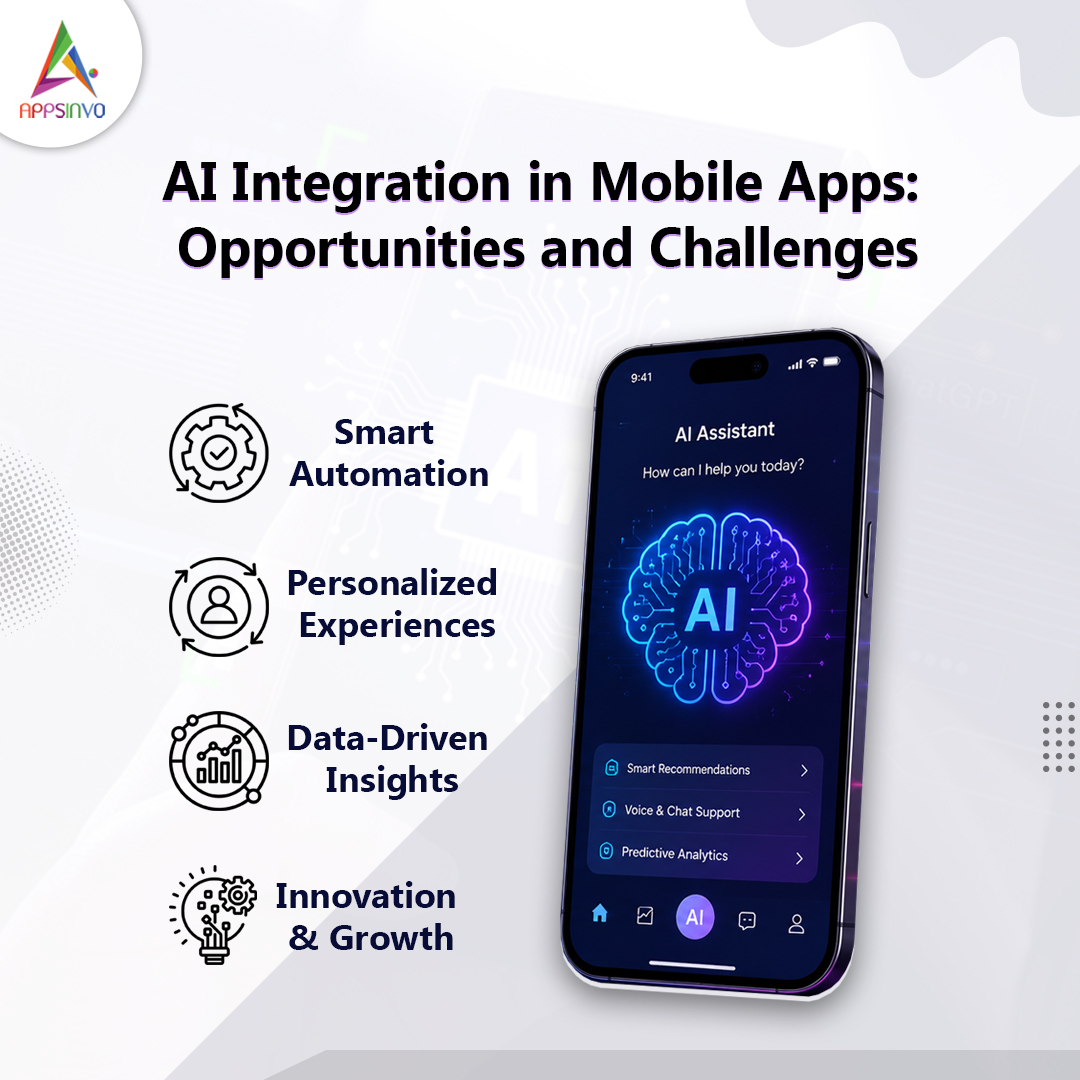
AI Integration in Mobile Apps: Opportunities and Challenges

0
4
AI Integration in Mobile Apps Opportunities and Challenges
Artificial intelligence has evolved from a futuristic term to a vital component of current mobile applications. AI is transforming how organisations develop mobile applications and how customers interact with them, from personalised suggestions to voice assistants and predictive analytics. At Appsinvo, we help organisations navigate this changing landscape, harnessing AI’s potential while solving the practical challenges that come with it.

Introduction

Mobile apps today are expected to be smarter, faster, and more intuitive than ever before. Users no longer just want an app that performs a function β€” they want an app that understands their behavior, anticipates their needs, and delivers a personalized experience. This shift is largely driven by advancements in Artificial Intelligence (AI) and Machine Learning (ML).

However, integrating AI into mobile apps isn’t just about adding a chatbot or a recommendation engine. It requires careful planning, the right technology stack, and an understanding of both the opportunities it unlocks and the challenges it brings.

Opportunities of AI Integration in Mobile Apps
Appsinvo : Best Event App Development Company in Norway for Worldwide Businesses

1. Personalized User Experiences

AI enables apps to analyze user behavior, preferences, and usage patterns to deliver highly personalized content, recommendations, and interfaces β€” increasing engagement and retention.

2. Enhanced Customer Support with Chatbots

AI-powered chatbots and virtual assistants can handle customer queries 24/7, reducing response time and operational costs while improving customer satisfaction.

3. Predictive Analytics

AI helps businesses forecast user behavior, churn rates, and market trends, allowing companies to make data-driven decisions and proactively address user needs.

4. Voice and Image Recognition

Voice assistants and image recognition features (like AR filters, visual search, and biometric authentication) are becoming standard expectations, and AI makes these seamless and accurate.

5. Improved Security

AI-driven fraud detection and anomaly detection systems help identify suspicious activities in real time, making apps β€” especially in fintech and banking β€” significantly more secure.

6. Automation of Repetitive Tasks

From automating customer onboarding to content moderation, AI reduces manual effort, freeing up resources for more strategic work.

7. Smarter Search and Recommendations

E-commerce and content-based apps benefit hugely from AI-driven search algorithms that improve product discovery and content suggestions, boosting conversions.

Challenges of AI Integration in Mobile Apps
Challenges-of-AI-Integration-in-Mobile-Apps-banner

1. High Development and Infrastructure Costs

Building and training AI models, along with maintaining the required computational infrastructure, can be expensive β€” particularly for startups and small businesses.

2. Data Privacy and Security Concerns

AI systems rely heavily on user data. Ensuring compliance with data protection regulations (like GDPR) while maintaining user trust is a significant challenge.

3. Complexity in Development

Integrating AI requires specialized skills in machine learning, data science, and app development β€” making it harder to find the right talent and build a cohesive team.

4. Data Quality and Availability

AI models are only as good as the data they’re trained on. Poor quality or insufficient data can lead to inaccurate predictions and a subpar user experience.

5. Device Performance Limitations

Running AI models directly on mobile devices (on-device AI) can strain processing power and battery life, requiring careful optimization.

6. Maintaining Model Accuracy Over Time

AI models need continuous monitoring, retraining, and updates to stay accurate and relevant as user behavior and market conditions evolve.

7. User Trust and Transparency

Users are often wary of how their data is used by AI systems. Building transparent AI features that clearly communicate their value is essential for adoption.

How Appsinvo Helps Businesses Navigate AI Integration
At Appsinvo, we understand that successful AI integration goes beyond just adding smart features β€” it’s about aligning AI capabilities with real business goals. Our team specializes in:

  • Identifying the right AI use cases for your app and industry
  • Building scalable, secure AI-powered mobile applications
  • Ensuring data privacy compliance throughout development
  • Optimizing AI models for performance across devices
  • Providing ongoing support to keep your AI features accurate and effective

Whether you’re looking to add a recommendation engine, a chatbot, predictive analytics, or advanced security features, Appsinvo has the expertise to turn your vision into a high-performing, AI-driven mobile app.

Conclusion

AI integration in mobile apps presents immense opportunities for businesses to enhance user experience, streamline operations, and stay competitive. However, it also comes with challenges that require careful planning, the right expertise, and a strategic approach.

Partnering with an experienced mobile app development company like Appsinvo ensures that you can harness the full potential of AI while effectively navigating its complexities β€” building apps that are not just smart, but truly impactful.

Explore the Following Mobile App Development Blogs:-

πŸ”—Boost App Speed with Smart Compression Methods in Mobile Development
πŸ”—Difference Between Kotlin and Flutter: A Complete App Development Comparison
πŸ”—The Future of Mobile App Development Trends Shaping 2026 and Beyond
πŸ”—Why Mobile App Development is Essential for Business Growth in the Digital Age
πŸ”—Mobile App Optimization: The Power of Data Compression Explained
πŸ”—Flutter vs. React Native: A Detailed Comparison for 2026
πŸ”—Android vs iOS: Which Platform is Better for App Development
πŸ”—How to Succeed in Mobile App Development (Step-by-Step Guide)
πŸ”—The Ultimate Guide to Creating Innovative Mobile Applications
πŸ”—Integrating AI in Mobile Apps: Use Cases, SDKs, and Privacy Considerations
πŸ”—Why Mobile App Development Is Essential for Business Growth
πŸ”—Image and Video Compression in Mobile Apps: A Complete Guide
πŸ”—How Much Does It Cost to Build an App in 2026?
πŸ”—How AI Is Transforming the Future of Mobile App Development
πŸ”—Mobile App Development Strategies for Beginners
πŸ”—Mobile App vs Website: Which Should You Build First
πŸ”—How to Reduce App Size Using Advanced Compression Techniques
πŸ”—How to Win Clients and Boost Sales with Mobile App Development
πŸ”—How to Make Your Mobile App Stand Out in Just 5 Days
πŸ”—3 Ways Social Media Can Impact Your Mobile App Business
πŸ”—From Idea to App Store: A Complete Mobile App Development Journey
πŸ”—Best Compression Strategies for High-Performance Mobile Applications
πŸ”—3 Effective Ways to Accelerate Mobile App Development
πŸ”—5 Things You Should Do Immediately for Mobile App Success
πŸ”—5 Simple Steps to Create an Effective Mobile App Development Strategy
πŸ”—Android vs iOS: Which Platform is Better for App Development?
πŸ”—5 Common Mistakes That Make Mobile App Development a Waste of Time
πŸ”—4 Ways to Boost Creativity in Mobile App Development
πŸ”—5 Easy Ways to Turn Your Mobile App Idea into Success
πŸ”—15 Proven Tips for Mobile App Development Success
πŸ”—3 Easy Ways to Speed Up Healthcare App Development
πŸ”—How to Learn Mobile App Development (Beginner’s Guide)
πŸ”—Android vs iOS App Development: Which is Better for Your Business?
πŸ”—How Custom Mobile App Development Can Boost Your Business Growth
πŸ”—Key Features Every Successful Business App Must Have
πŸ”—The Future of Mobile App Development: Trends to Watch in 2026
πŸ”—Step-by-Step Guide to Developing a Successful Mobile App in 2026
πŸ”—The Importance of App Testing: Ensuring Quality in Mobile Development
πŸ”—Top Features Every Leading Mobile App Development Company Offers
πŸ”—Choosing the Right Technology Stack for Your Mobile App
πŸ”—Β How to Optimize Your Mobile App for Performance and User Experience
πŸ”—Β On-Demand App Development: Why It’s Growing Rapidly in 2026
πŸ”—Β Mobile App Development Lifecycle: From Planning to Deployment
πŸ”—Β The Future of Mobile Apps: AI and Machine Learning Integration
πŸ”—Β What Is the Cost of Designing a Mobile App?
πŸ”—Why Cross-Platform App Development is a Smart Choice in 2026
πŸ”—Β Common Mistakes to Avoid in Mobile App Development
πŸ”—Β The Complete Guide to Google Play App Store Optimization for Android Apps in 2025
πŸ”—Β Building a Mobile App from Scratch
πŸ”—Β Mobile App Development Company Growth Strategies in India
πŸ”—Β Latest Top 10 UX/UI Tools Used For App Design
πŸ”—Β Roles of Mobile App Consulting Services for Your Business App
πŸ”—Β Top Techniques to Build and Develop the Best Mobile App for Business
πŸ”—Β What Are the Basics of Mobile App Development?
πŸ”—Β How to Choose the Right Mobile App Development Company
πŸ”—Β Top 15+ Tools for Building a Mobile App
πŸ”—Β How Does User Experience Impact Mobile App Development?
πŸ”—Β What are the Best Practices for Mobile App Development?
πŸ”—Β 6 Benefits of Outsourcing to a Mobile App Development Company
πŸ”—Β The Impact of Technology on Mobile App Development Companies in India
πŸ”—Β What are the Key Considerations for Mobile App Creation?
πŸ”—Β Mobile App Development Company Growth Strategies in India
πŸ”—Β What are the Best Practices for Mobile App Development?
πŸ”— How Does User Experience Impact Mobile App Development?
πŸ”— What Are the Basics of Mobile App Development?
πŸ”— How to Choose the Right Mobile App Development Company in 2024
πŸ”— 10 Essential Steps for Mobile App Development
πŸ”— How Can Mobile App Development Benefit Your Business?
πŸ”—10 Reasons to Invest in a Top Mobile App Development Company in India
πŸ”—Β Top Trends in Mobile App Development for 2024
πŸ”—List of Top 10 Mobile App Development Frameworks in 2024
πŸ”—Exploring the Future of Augmented Reality in Mobile App Development
πŸ”—Β Challenges of Enterprise Mobile App Development
πŸ”—Β Top Mobile App Development Using Angular Frameworks
πŸ”—Β Why IoT is the Future Of Mobile App Development?
πŸ”— Significance of DevOps in Mobile App Development
πŸ”— Worst Mobile App Development Mistakes to Avoid
πŸ”—Β Factors That Affect the Success of Web & Mobile App Development
πŸ”—Β Cloud-Native App: The Future of Mobile App Development
πŸ”— Stages of Cross-Platform Mobile App Development
πŸ”—Β Important Points to Follow for Mobile App Development
πŸ”—Β Benefits of Integrating IoT into Mobile App Development Process
πŸ”—Β Progressive Web Apps- A New Trend of Mobile App Development
πŸ”—Β Points You Must Consider While Mobile App Development
πŸ”—Β What is the Future of Mobile App Development

LEAVE A REPLY

Please enter your comment!
Please enter your name here